
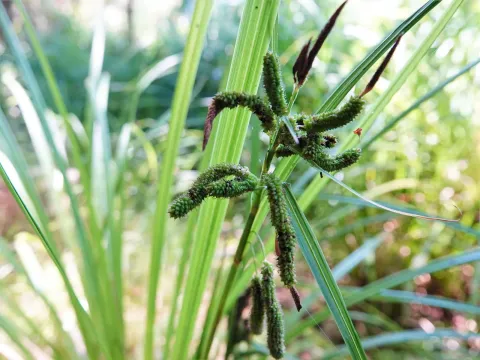
Lesson's sedge
Carex lessoniana
Lesson's sedge (Carex lessoniana) is a perennial herbaceous plant belonging to the Cyperaceae family. It is primarily adapted to wetland habitats and marshy environments, where it serves as a critical component of the local vegetation structure.
What the section contains
Lesson's sedge
The plant thrives in soil conditions that are characterized by high moisture content and high water tables. It is typically found in boggy meadows, pond margins, and areas with poorly drained soils, where its root system can access consistent moisture throughout the growing season.
Botanically, this species is distinguished by its robust rhizomes, which allow it to form dense clusters. This physical trait makes it highly effective at soil stabilization, preventing erosion in areas prone to seasonal flooding or high saturation levels.
Regarding climate, Lesson's sedge demonstrates significant cold tolerance, allowing it to survive harsh winter conditions. It prefers temperate zones where the growing season provides sufficient moisture to support its rapid development of leaf biomass.
Agricultural management for this species is relatively low-input compared to conventional crops. It does not typically require extensive fertilization, as it is adapted to the nutrient-rich organic soils often found in wetlands, provided the water balance is maintained properly.
The primary agricultural use of Lesson's sedge lies in its role as a source of roughage for livestock. When harvested at the appropriate growth stage, it can contribute effectively to the maintenance rations of cattle during periods of seasonal forage scarcity.
Timing the harvest is critical to ensure high nutritional quality. Harvesting before the plant reaches full maturity helps maximize the protein content and overall digestibility of the forage, preventing the excessive lignification of the stems.
Techniques for harvesting often involve using specialized equipment capable of operating on soft or waterlogged terrain. Careful drying procedures are essential to avoid issues with spoilage, as the stems of the sedge retain moisture quite efficiently compared to lighter grasses.
Beyond its forage potential, this plant is increasingly recognized for its role in environmental engineering. It is frequently employed in riparian restoration projects to improve water quality and provide habitat for native wildlife species in disturbed aquatic zones.
The plant also shows potential in sustainable agricultural systems where integrated management of wet lands is required. By utilizing such hardy species, land managers can achieve both ecological health and productive utility on marginal lands that were previously considered unusable.