
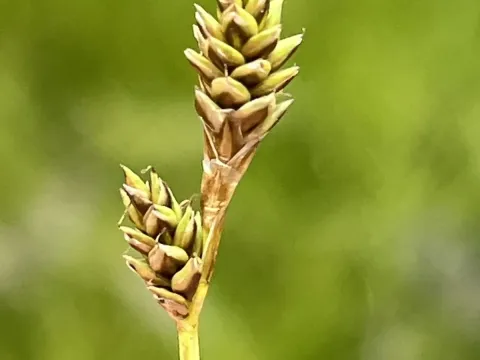
Lesser tussock sedge
Carex glareosa
Lesser tussock sedge (Carex glareosa) is a member of the Cyperaceae family, characterized by its perennial growth and spreading rhizomatous habit. It is naturally adapted to arctic and subarctic environments, typically found in coastal areas and around saline marshes.
What the section contains
Lesser tussock sedge
The climate requirements for this plant are quite specific, as it thrives in cold, moist conditions. It is highly resistant to frost and cold-stress, allowing it to colonize regions where many other forage plants fail to establish themselves due to harsh winters.
Regarding soil preferences, this species is specialized for gravelly, sandy, and damp substrates. Its salt tolerance makes it an essential species for maintaining the structure of coastal ecosystems and preventing soil erosion in volatile environments.
Cultivation practices for this species are limited to ecological restoration and soil stabilization projects rather than intensive agriculture. Its ability to spread through rhizomes creates a dense ground cover that protects the topsoil from mechanical disturbance.
While not a traditional forage crop, the plant provides essential biomass in arctic regions. Managing its population requires preserving the natural hydrological balance of the areas where it naturally occurs, as artificial drainage can be detrimental to its survival.
The primary threats to this species include habitat fragmentation and climate-driven changes in coastal water levels. When water levels fluctuate drastically, the niche occupied by Carex glareosa can quickly disappear.
Fungal diseases, including various rust species, pose a consistent threat during wet and humid seasons. These pathogens can weaken the structural integrity of the plant, leading to stunted growth and reduced seed production capacity.
Insect pests such as shoot-boring larvae can compromise the health of individual clumps, although these outbreaks are typically localized. The impact of such pests is more pronounced in areas where plant diversity is low.
Competition from more aggressive, non-native grasses is a rising concern, especially in areas where human activity disturbs the natural salt balance of the coastal soil, favoring species that are not adapted to saline conditions.
Effective management involves regular field surveys to detect early signs of pathogenic spread and avoiding the introduction of foreign plant species that may outcompete the sedge in its original, fragile habitat.