
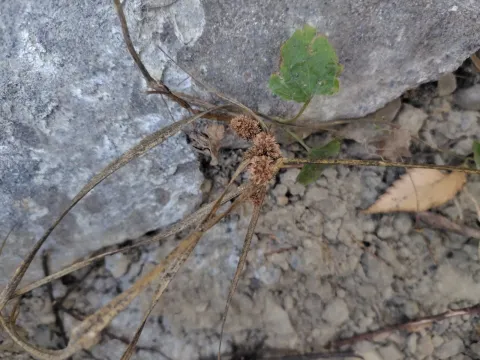
Lipocarpha
Lipocarpha
Lipocarpha is a genus of flowering plants belonging to the Cyperaceae family, commonly known as the sedge family. This genus includes various species that are adapted to tropical and subtropical climates, often found in marshy areas, wetlands, and along the banks of water bodies across several continents.
What the section contains
 Lipocarpha chinensis
Lipocarpha isolepis
Lipocarpha isolepis
Lipocarpha kernii
Lipocarpha kernii
Lipocarpha chinensis
Lipocarpha chinensis
Lipocarpha isolepis
Lipocarpha isolepis
Lipocarpha kernii
Lipocarpha kernii
 Lipocarpha microcephala
Lipocarpha microcephala
Lipocarpha microcephala
 Lipocarpha nana
Lipocarpha prieuriana
Lipocarpha prieuriana
Lipocarpha sphacelata
Lipocarpha sphacelata
Lipocarpha nana
Lipocarpha nana
Lipocarpha prieuriana
Lipocarpha prieuriana
Lipocarpha sphacelata
Lipocarpha sphacelata
 Small-flowered lipocarpha
Lipocarpha micrantha
Small-flowered lipocarpha
Lipocarpha micrantha
Lipocarpha
Botanically, plants of the Lipocarpha genus are recognized by their distinct inflorescences, which appear as dense, capitate spikelets. The leaves are typically narrow, grass-like, and basal, while the culms are usually solid and triangular in cross-section, a typical trait for many sedges.
Regarding climatic requirements, Lipocarpha thrives in humid and warm environments. These plants are essentially hydrophytes or hygrophytes, meaning they require a constant water supply. Excessive heat combined with soil moisture deficiency is detrimental to their growth and development.
Soil conditions play a crucial role in the survival of Lipocarpha. They prefer fine-textured soils, such as silt or clay, that have a high water-holding capacity. In agricultural contexts, they are often observed as weeds in paddy fields, indicating their preference for the waterlogged conditions typical of rice cultivation.
While not a traditional cash crop, the study of Lipocarpha is important for environmental management. Its ability to tolerate saturated soils makes it a candidate for constructed wetlands and phytoremediation projects aimed at filtering agricultural runoff and improving water quality near farming operations.