
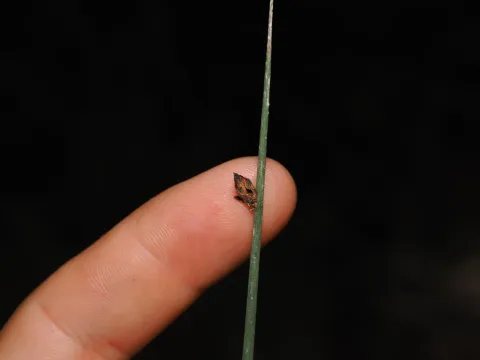
Lepironia
Lepironia Rich.
Lepironia (Lepironia articulata) is a perennial sedge belonging to the Cyperaceae family. It is native to tropical wetlands and is widely recognized for its ecological importance and its role in sustainable agricultural practices in Asian regions.
What the section contains

Lepironia
The plant thrives in saturated soil conditions, marshes, and shallow water bodies. Its root system is highly adapted to anaerobic conditions, allowing the plant to dominate in environments that are typically unsuitable for traditional cereal crops.
Botanically, Lepironia is characterized by its cylindrical, hollow, and leafless stems. These stems are highly valued for their high fiber content and structural integrity, which makes them durable once they are properly processed and dried.
Regarding climate, it requires high temperatures and consistent humidity throughout the growing season. The plant does not possess significant frost tolerance, limiting its large-scale cultivation to tropical and subtropical climatic zones.
Agronomic management involves maintaining precise water levels in the cultivation paddies. While it is a hardy plant, periodic monitoring of water quality and soil acidity is recommended to ensure optimal growth rates and the production of high-quality industrial fiber.
The harvest of Lepironia is primarily a manual operation. Farmers use traditional tools to cut the mature stems as close to the root zone as possible, which ensures faster regeneration of the plant for subsequent harvesting cycles.
Post-harvest processing involves sorting, bundling, and controlled drying. Drying is a crucial stage where moisture must be removed uniformly to prevent the degradation of fiber quality and to ensure the stems remain pliable for weaving purposes.
The stems are widely used for weaving mats, bags, and traditional handicrafts. Because of its flexibility, Lepironia is often preferred over other coarse grasses for manufacturing products that require both strength and softness.
In terms of plant health, Lepironia is highly resistant to many common agricultural pests and diseases. This natural resilience makes it an environmentally friendly crop, as it requires very little intervention in terms of synthetic pesticides or fertilizers.
Strategic management of the harvest cycle allows farmers to sustain production for several years without the need for replanting. This perennial nature of the crop provides economic stability for smallholder farmers who integrate Lepironia into their agricultural systems.