
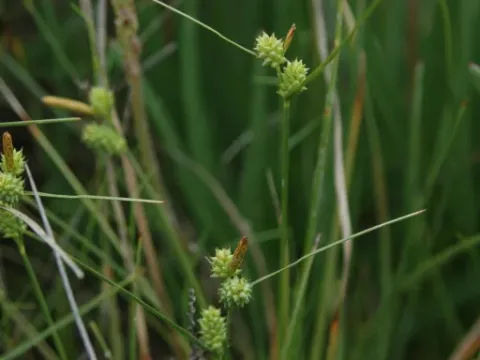
Long-bracted sedge
Carex extensa
Long-bracted sedge (Carex extensa) is a perennial herbaceous plant belonging to the Cyperaceae family. It is widely recognized for its adaptation to coastal habitats, specifically salt marshes and brackish wetlands where salinity levels prevent the growth of common agricultural crops.
What the section contains
Long-bracted sedge
The plant exhibits a unique botanical structure characterized by compact, dense tufts and narrow, stiff leaves. These features allow the sedge to conserve water efficiently and survive in the challenging conditions of high soil salt concentrations and varying hydrological regimes.
In terms of growth requirements, this species favors well-lit areas with consistent moisture levels. It thrives in clay and sandy substrates and shows a remarkable ability to tolerate periodic tidal inundation, making it an essential component of coastal stabilization projects.
The climate requirements for Carex extensa include temperate to Mediterranean coastal environments. It is resilient against temperature fluctuations, provided that the soil hydrology remains stable throughout the main growing season, ensuring vegetative productivity.
From an agricultural and ecological standpoint, this sedge is valuable for soil erosion control and as a supplementary forage source in saline pastures. Its ability to colonize degraded lands helps in restoring the functionality of coastal ecosystems.
The primary threats to long-bracted sedge populations include hydrological disruption, such as over-drainage or excessive siltation. Significant changes in natural water flows can lead to the loss of suitable niches and promote the growth of invasive species.
Pathogenic fungi represent the most frequent disease challenge for this plant. Conditions with poor airflow and excessive humidity often lead to leaf spot diseases, which can inhibit photosynthetic activity if not managed through proper vegetation density control.
Various insect pests, including stem-boring larvae and seed-feeding weevils, can affect the vitality of the plant. While wild populations are generally resistant, large-scale cultivation may require monitoring of these pests to maintain seed viability.
Preventive strategies involve ensuring proper field maintenance and avoiding over-grazing, which can leave plants vulnerable to opportunistic pathogens. Rotation of grazing animals is a recommended practice to maintain the health and vigor of the sedge stands.
Overall, Carex extensa is a robust species with few major pest concerns compared to standard crops. Long-term productivity is best achieved by mimicking natural conditions and avoiding excessive chemical interventions that could disturb the sensitive coastal balance.