
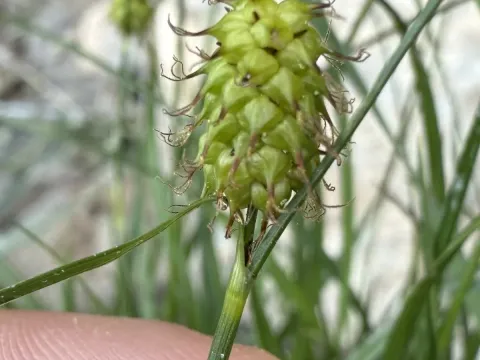
Long-bracted sedge
Carex lepidocarpa
Carex lepidocarpa, commonly known as the long-bracted sedge, belongs to the Cyperaceae family and is a perennial plant typically found in wetlands and marshy meadows.
What the section contains
Long-bracted sedge
The plant thrives in calcareous soils, showing a strong preference for sites with high moisture content and a pH range that is neutral to slightly alkaline.
Botanically, it is distinguished by its specific inflorescence structure, where the female spikes are distinctly separated and have reflexed perigynia at maturity.
Climatic requirements involve stable environmental conditions, with the species being highly sensitive to changes in groundwater levels and habitat drying.
Agricultural management of such areas requires careful monitoring of the hydrological balance to ensure the survival and vigor of the vegetation stands.
In terms of agricultural productivity, the long-bracted sedge is not an industrial crop but rather a component of natural meadow hay production.
Its nutritional value as fodder is relatively low due to its high fiber content and the rapid lignification of the stems after the peak growth phase.
The yield of biomass is dependent on the natural seasonal rainfall, and the plant does not respond to conventional chemical fertilizers as standard crops do.
It is primarily utilized for landscape stabilization and conservation purposes in wet meadow ecosystems rather than for intensive harvesting.
When included in livestock diet, it is recommended to harvest early in the season to maintain better palatability and lower fiber concentrations.
The species is generally resistant to many common agricultural diseases that affect cereal crops, partly due to its adaptation to wetland niches.
Potential threats include the degradation of peatlands and swamps, which directly impacts the available growing area for Carex lepidocarpa.
Some fungal pathogens can occur under conditions of extreme stagnation, but these are rarely considered a major pest concern in natural settings.
Anthropogenic disturbances, such as excessive drainage and industrial land use, pose a significant threat to the survival of local populations.
Competition from more aggressive plant species may occur if the habitat characteristics, particularly the water table, undergo significant changes.