
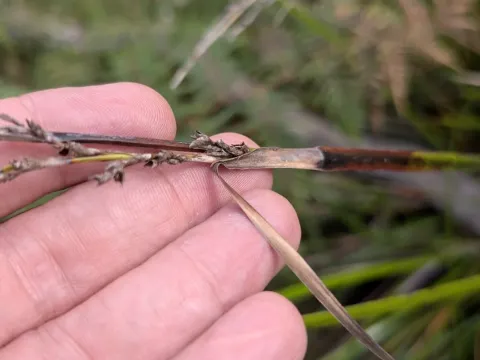
Lepidosperma laterale
Lepidosperma laterale
Lepidosperma laterale, commonly known as the variable saw-sedge, is a robust perennial herb belonging to the Cyperaceae family. It is widely recognized for its tough, sharp-edged foliage and its ability to thrive in harsh environments where more delicate species fail to establish.
What the section contains
Lepidosperma laterale
Native to Australia, this plant is found in various habitats including heathlands, forests, and rocky outcrops. Its broad ecological amplitude allows it to occupy diverse niches across the continent, making it a valuable subject for ecological studies.
Botanically, the plant is characterized by its stiff, rush-like leaves that grow in dense, upright clumps. Its root system is fibrous and deep, which makes it particularly effective at binding loose soil and preventing surface erosion.
Regarding cultivation requirements, L. laterale prefers well-drained, sandy, or stony substrates. While it is tolerant of low-fertility soils, it thrives in full sunlight, though it maintains its structural integrity even in partially shaded areas.
Agricultural and landscape applications are primarily focused on soil conservation and the restoration of degraded terrains. It is favored by land managers for its low maintenance requirements and its long lifespan under natural conditions.
This species is inherently resilient and possesses a high level of natural defense mechanisms against common fungal pathogens that typically afflict grasses and sedges.
The most significant threat to the plant's health is prolonged waterlogging, which often leads to root rot if the soil structure does not provide adequate drainage. This is especially critical during the establishment phase.
In terms of insect pests, the plant may occasionally attract sap-sucking insects during the early stages of growth, though these rarely reach levels that require chemical intervention.
Integrated pest management strategies for L. laterale prioritize environmental manipulation, such as ensuring correct soil aeration and preventing excessive moisture buildup in the root zone.
Biological control and mechanical removal of dead biomass are the preferred methods for maintaining plant vitality, ensuring long-term success in conservation or landscaping projects.