
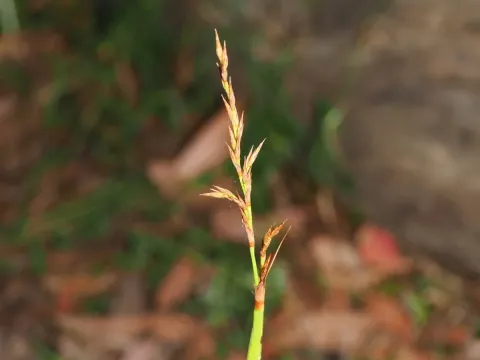
Lepidosperma
Lepidosperma
Propagation of Lepidosperma is commonly achieved through vegetative division of the rootstock, which is the most reliable method for maintaining variety characteristics.
What the section contains

Lepidosperma
For seed sowing, the process should be initiated in early spring, ensuring that the soil temperature is maintained consistently to support germination.
Seeds often exhibit dormancy, necessitating pre-treatment such as cold stratification to mimic natural environmental conditions and break the dormancy period.
The seeds are sown in a light, sandy medium, ensuring that they are barely covered with soil, as they require light to stimulate the initial growth stages.
Consistent moisture management is crucial during the seedling stage, requiring fine-mist irrigation until the plant establishes a robust root system.
Lepidosperma is a genus belonging to the Cyperaceae family, featuring many species native to the Australian continent and parts of Southeast Asia.
The plant thrives in well-drained, nutrient-poor soils, reflecting its adaptation to challenging environmental conditions in its native range.
High levels of solar radiation are essential for the healthy development of this species; thus, full sun exposure is the primary requirement for planting sites.
The plant exhibits exceptional drought tolerance due to the structural composition of its narrow, stiff leaves that effectively reduce water transpiration.
Good soil drainage is critical, as stagnant water in the root zone, especially during cooler periods, can lead to physiological stress and rot.
While not a traditional food crop, Lepidosperma serves significant purposes in landscaping, erosion control, and environmental restoration projects.
Ongoing research explores the potential of utilizing its fibers for industrial applications, including the production of specialized mulch or textile materials.
Yield efficiency is determined by the plant's ability to maintain dense vegetative growth under minimal maintenance and low-input agricultural conditions.
In ornamental cultivation, the "yield" is measured by the plant's aesthetic appeal, including leaf density, color vibrancy, and overall structural integrity.
Productivity remains relatively stable across seasons, provided the plant is situated in its optimal ecological niche with adequate light and drainage.
The tough, silica-rich foliage of Lepidosperma provides a natural defense against many common agricultural pests, making it a resilient garden specimen.
Root rot, induced by waterlogged soil conditions, remains the most significant threat to the health and longevity of the plant in cultivation.
In densely packed conditions, poor air circulation may invite fungal pathogens, which can be mitigated by ensuring proper spacing between plants.
Weed infestation during the initial establishment phase is a critical challenge, as competing vegetation can easily outgrow young sedge seedlings.
Integrated pest management focusing on soil health and proper irrigation scheduling is generally sufficient to maintain healthy plant stands.
Harvesting of ornamental foliage is typically performed during the dormant season to stimulate new growth and refresh the plant's appearance for spring.
Seed harvesting should be timed carefully when the spikes have fully matured and turned brown, ensuring maximum seed viability for subsequent planting cycles.
The use of sharp mechanical tools is recommended for harvesting to prevent crushing the fibers and to ensure a clean cut that heals quickly.
Collected biomass should be stored in dry, well-ventilated areas to prevent fungal growth within the fiber structures post-harvest.
Processing methods for fiber extraction are currently being studied, focusing on efficiency and the preservation of natural strength properties of the plant.