
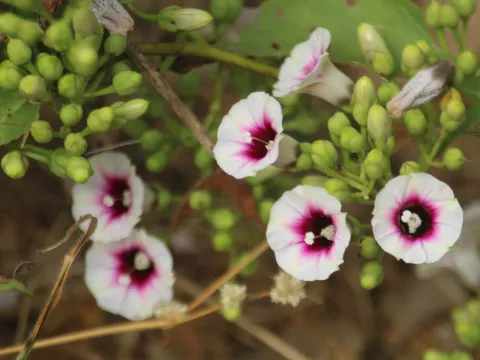
Ipomoea staphylina
Ipomoea staphylina
Ipomoea staphylina is typically propagated through seeds or stem cuttings within a controlled greenhouse environment to ensure success.
What the section contains
Ipomoea staphylina
The seeds possess a hard seed coat, making scarification a necessary pre-sowing treatment to improve germination rates significantly.
Sowing occurs in late winter or early spring using a well-draining potting medium to give the plant a long vegetative head start.
Seedlings are pricked out into individual pots once they reach the two-leaf stage, allowing the roots to establish properly.
Transplanting into open ground is only viable once all danger of frost has passed, as the plant is highly sensitive to cold temperatures.
As a member of the Convolvulaceae family, this species thrives best in locations with abundant, direct sunlight for maximum growth.
The ideal soil profile for Ipomoea staphylina consists of loose, fertile loam with excellent drainage to prevent root moisture stress.
Being a woody vine, the plant requires strong, durable structural support systems to accommodate its climbing habit and woody structure.
Regular application of balanced NPK fertilizers during the growing season is essential to support the development of foliage and flowers.
Maintaining a consistent moisture level is important, though waterlogging must be strictly avoided to prevent physiological disorders.
The most common pest for this vine is the spider mite, which flourishes in environments with low humidity and high temperatures.
Aphids often target new, succulent growth at the tips of the vines, potentially transmitting viral pathogens if left uncontrolled.
Root rot remains a major threat, usually triggered by compacted soil or insufficient drainage in the planting container or field.
Powdery mildew can affect the leaves during periods of fluctuating humidity, appearing as a white fungal growth on the foliage surface.
Preventative care involves ensuring proper airflow around the vines and utilizing systemic pesticides whenever an infestation is detected.