
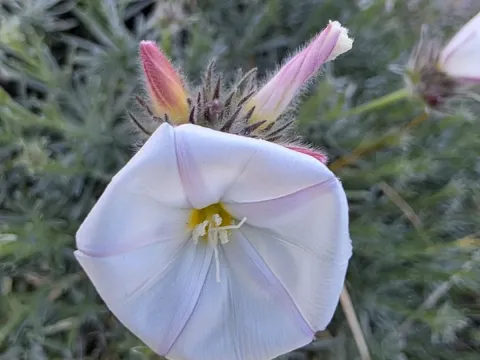
Convolvulus lanuginosus
Convolvulus lanuginosus
Convolvulus lanuginosus, commonly known as woolly bindweed, is a perennial herbaceous plant belonging to the Convolvulaceae family. It is distinguished by its dense, silver-toned trichomes (hairs) covering the foliage, which serve as a critical adaptation to reduce water loss and protect the plant from high solar radiation.
What the section contains
Convolvulus lanuginosus
This species is native to the Mediterranean region, where it thrives in rocky, well-drained soils and arid environments. It is highly valued for its xeric properties, making it an excellent candidate for water-wise landscaping and gardens located in hot, dry climates where other species might fail to survive.
The cultural requirements for this plant focus on soil drainage. It performs best in poor, rocky, or sandy substrates with neutral to slightly alkaline pH levels. Heavy, clay-rich soils that retain moisture for extended periods should be avoided, as they frequently lead to the decline of the root system.
Regarding agrotechnical practices, Convolvulus lanuginosus requires minimal intervention. It does not need frequent fertilization, as it is adapted to low-nutrient soils. Once established, the plant becomes remarkably drought-tolerant and requires little to no supplemental watering.
The plant provides significant aesthetic value due to its unique texture and color. It is typically used as a groundcover on slopes or as an accent plant in rock gardens, contributing to the structural diversity of the landscape while maintaining its ornamental appeal throughout the growing season.
The primary threats to Convolvulus lanuginosus are fungal pathogens, specifically those that thrive in conditions of high humidity. Powdery mildew can affect the foliage during prolonged periods of rainfall, necessitating the application of copper or sulfur-based fungicides to prevent widespread infection.
Pest pressure on this species is relatively low. The dense woolly hairs provide a mechanical barrier that deters many common insects, such as aphids or spider mites, from settling on the plant. However, monitoring remains advisable during exceptionally dry seasons in greenhouse or nursery conditions.
Prevention of root rot is essential for the long-term health of the plant. This condition is almost exclusively caused by improper site selection, where water drainage is insufficient. To mitigate this risk, gardeners should ensure the soil is porous and sufficiently elevated from the water table.
Maintaining air circulation is a key cultural practice that significantly reduces the incidence of fungal outbreaks. Pruning is rarely necessary but can be used to remove dead stems and encourage new, healthy growth in the spring, which helps keep the plant dense and vigorous.
Overall, Convolvulus lanuginosus is a robust and resilient species. By adhering to the principles of proper drainage and ensuring full sun exposure, the plant can successfully resist most environmental stresses and biological threats.