
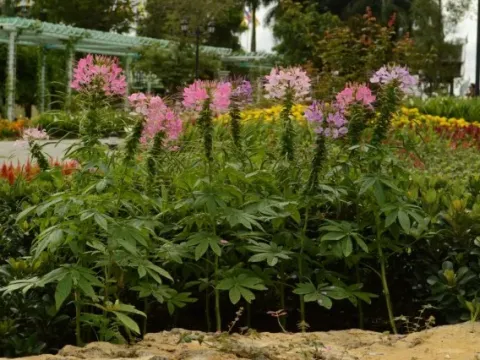
Cleome caeruleorosea
Cleome caeruleorosea
Cleome caeruleorosea is a warm-season annual plant, meaning it should be sown in the garden only after the last danger of frost has passed in late spring.
What the section contains
Cleome caeruleorosea
Starting seeds indoors 6 to 8 weeks before the last frost date is the most reliable method for ensuring a long and vibrant flowering season.
The seeds possess a hard coat that often benefits from light scarification or pre-soaking in water to improve germination rates and uniformity.
Surface sowing is recommended as the seeds require exposure to a certain level of light to break dormancy and trigger the initial germination process.
Maintaining a steady soil temperature between +20 and +25 degrees Celsius is crucial during the early stages of development to prevent seed rot.
Full sun is essential for this species; plants grown in partial shade tend to become leggy, lose their structural integrity, and produce fewer flowers.
Well-drained, fertile soil is a non-negotiable requirement, as the root system of this member of the Capparaceae family is susceptible to decay in waterlogged conditions.
The plant performs best in neutral to slightly alkaline soil conditions, which should be enriched with organic matter before planting to ensure nutrient availability.
Watering should be deep but infrequent, allowing the top layer of the soil to dry out between sessions to maintain healthy and vigorous root expansion.
Regular fertilization with a balanced, slow-release fertilizer during the growth phase supports the intensive blooming cycle characteristic of this plant.
Fungal diseases, particularly those related to damp conditions and poor air circulation, are the most frequent threats to the overall health of the plants.
Powdery mildew is a common concern in humid climates, often appearing as a white, dusty layer on leaves, which requires immediate fungicide application to contain.
Pests such as aphids and spider mites can thrive in the foliage during hot, dry spells, necessitating proactive scouting and the use of insecticidal soap.
Maintaining proper spacing between individual plants is one of the most effective cultural practices for reducing the risk of disease and pest outbreaks.
- Proper plant spacing.
- Removal of infected debris.
- Use of disease-resistant cultivars.
- Regular inspection of underside leaves.
- Appropriate irrigation management.