
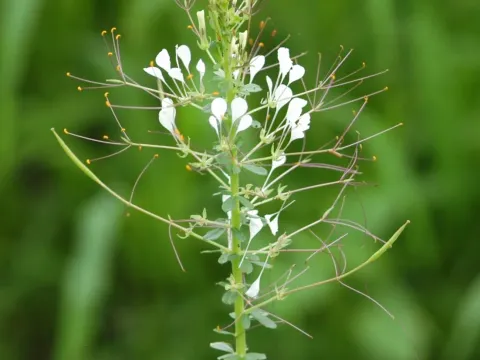
Cleome affinis
Cleome affinis
Cleome affinis is typically propagated through seed sowing, requiring careful temperature management for successful germination. In temperate regions, sowing indoors 6 to 8 weeks before the last expected frost is recommended to ensure robust seedlings ready for transplanting.
What the section contains
Cleome affinis
The seeds should be sown in a high-quality, well-draining seed-starting mix at a shallow depth. Maintaining a consistent temperature between 20-22 degrees Celsius is crucial during the germination phase to ensure a uniform emergence of seedlings across the seed tray.
Once true leaves appear, seedlings should be hardened off gradually before being moved to their permanent location. This acclimatization process helps the young plants adapt to fluctuating environmental conditions, reducing transplant shock and promoting root establishment.
Direct seeding in the field is only advisable in warmer climates where the growing season is sufficiently long. The soil must be thoroughly prepared by tilling to create a fine tilth, ensuring optimal contact between the seeds and the nutrient-rich substrate.
Spacing is a vital consideration; plants should be spaced approximately 45 to 50 cm apart to prevent overcrowding. Proper spacing minimizes competition for resources and facilitates better air movement, which is essential for maintaining plant health.
As a member of the Cleomaceae family, Cleome affinis thrives in full sunlight exposure. Selecting a site with at least 6 to 8 hours of direct sun daily is critical for maximizing both the vigor of the plant and its structural integrity during the growing season.
The plant performs best in moderately fertile, well-draining soils with a neutral pH level. It is highly sensitive to waterlogged conditions, which can lead to root system decay; therefore, soil drainage improvement is often a prerequisite for successful cultivation.
Nutrient requirements should be managed through the application of balanced fertilizers during the early vegetative growth stages. As the plant enters the budding and flowering phases, increasing phosphorus and potassium levels will support overall productivity.
Irrigation practices must be consistent, aiming to keep the root zone evenly moist without inducing saturation. Drought-stress management is particularly important during high-temperature spells, though the plant shows good resilience if properly established.
Regular cultivation of the soil around the base of the plants helps in aeration and suppresses competitive weed growth. Mulching can also be employed to regulate soil temperature and moisture levels, contributing to more stable and predictable development.
Aphids are the primary insect pest encountered when cultivating Cleome affinis. These insects cluster on succulent new growth and flower buds, necessitating the use of targeted systemic insecticides or horticultural oils to manage their populations effectively.
Powdery mildew represents a significant fungal threat, especially in humid environments with poor circulation. Early intervention with suitable fungicides or the removal of infected plant material is recommended to prevent the spread of the pathogen throughout the crop.
Root rot is often a consequence of poor drainage and over-irrigation. Prevention is the best strategy, focusing on site selection and the maintenance of optimal irrigation schedules to ensure that the soil never remains excessively saturated for prolonged periods.
Spider mites can become problematic during hot, dry weather conditions, causing stippling on the leaves and eventually leading to plant decline. Regular monitoring and overhead misting can help deter mite colonization before it reaches damaging levels.
General crop sanitation is an essential part of the agricultural management of Cleome affinis. Removing plant debris at the end of the season reduces the risk of overwintering pathogens and pests that could negatively impact future crop cycles.