
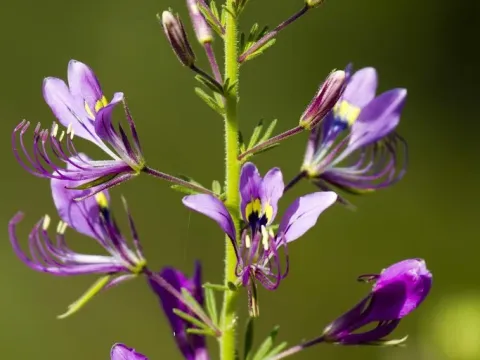
Cleome hirta
Cleome hirta
Cleome hirta is a heat-loving species that requires specific timing for successful propagation. In temperate climates, starting seeds indoors 6 to 8 weeks before the last expected frost is the standard agricultural practice.
What the section contains
Cleome hirta
Seeds should be sown in a well-draining, sterile seed-starting mix. Maintaining a consistent soil temperature of 21–24 degrees Celsius is essential for breaking dormancy and achieving uniform germination rates.
Once the seedlings develop two sets of true leaves, they should be transplanted into larger individual pots. This step encourages strong root architecture, which is vital for the plant's stability once moved outdoors.
Hardening off the seedlings is a critical phase. Over the course of a week, plants should be gradually exposed to outdoor conditions to prevent transplant shock upon final placement in the field.
Direct seeding in the garden is only feasible in regions with long, frost-free growing seasons. The seeds must be planted in shallow drills and kept consistently moist until emergence occurs.
As a member of the Capparaceae family, Cleome hirta thrives in environments with full sun exposure. Sunlight is the primary driver of its photosynthetic activity and influences the intensity of its floral production.
The plant performs best in fertile, loamy soils that possess excellent drainage. While it can adapt to various soil types, waterlogged conditions must be avoided as they significantly increase susceptibility to root pathogens.
Irrigation management is key to maintaining vigor. While Cleome hirta shows some tolerance to temporary moisture deficits, consistent water supply during the bloom phase ensures optimal decorative performance.
Nutrient requirements are moderate. Applying a balanced NPK fertilizer during the vegetative stage promotes healthy branching and robust stems, which are necessary to support the plant's height.
Spacing is a crucial factor in agronomic management. Planting at intervals of 45–60 centimeters allows for adequate airflow, which is the most effective way to prevent the buildup of humidity and fungal pathogens.
Root rot, primarily caused by Phytophthora or Pythium species, remains the most significant threat to Cleome hirta. Proper field drainage and judicious water management are the primary defense mechanisms.
Aphids represent a chronic pest pressure on this crop. These insects cluster on succulent new growth and flower buds, weakening the plant and potentially spreading viral pathogens that stunt overall development.
Spider mites can become problematic during hot, arid periods. They thrive in dry conditions and cause stippling on the leaves, which significantly reduces the plant's ability to undergo effective photosynthesis.
Powdery mildew appears when there is poor air circulation or high nocturnal humidity. The appearance of a white, dusty fungal growth on leaves indicates the need for immediate fungicide intervention.
Integrated Pest Management (IPM) practices, including the use of neem oil or insecticidal soaps, are recommended for maintaining plant health while minimizing environmental impact and protecting beneficial pollinators.