
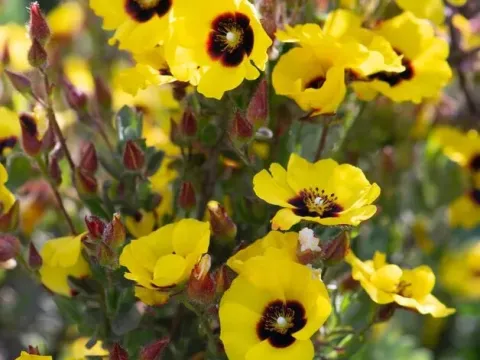
Halimium ocymoides
Halimium ocymoides
The sowing of this crop is best performed in early spring once the soil begins to warm up. Choosing a frost-free period in April ensures optimal germination and survival for the young seedlings in their outdoor environment.
What the section contains
Halimium ocymoides
Seeds should be sown in a well-draining, sandy substrate at a shallow depth of approximately 0.5 to 1 centimeter. Consistent but light moisture is essential during the germination phase to ensure the seeds do not dehydrate before sprouting.
For container-grown starts, sow seeds in late winter in a greenhouse setting. Providing supplemental light is crucial for producing sturdy, healthy plants that are ready for transplanting once the danger of frost has fully passed.
Transplanting into the garden should be done carefully to avoid disturbing the root system. Spacing the plants 50 to 60 centimeters apart allows for adequate airflow, which is critical for preventing fungal issues common in this species.
Vegetative propagation via cuttings taken in the summer is an alternative method for producing clones. Cuttings should be rooted in a mix of perlite and peat to encourage rapid root development before winter dormancy.
Halimium ocymoides is a compact evergreen subshrub belonging to the Cistaceae family. Native to the Mediterranean region, it is perfectly adapted to dry, sunny environments and rocky, nutrient-poor soil types.
This species requires full sun exposure to flourish. Providing it with at least six to eight hours of direct sunlight daily is mandatory to achieve its signature bright yellow blooms and maintain a dense, compact form.
Soil requirements focus on drainage. It thrives in gritty or sandy soils with a neutral to slightly acidic pH. Avoiding compacted clay or soil that retains too much moisture is the single most important factor for success.
It is a highly drought-tolerant plant once established, requiring minimal intervention. Irrigation should be restricted to the initial establishment year or during exceptionally long periods of extreme heat without any precipitation.
Maintenance involves minor pruning after flowering is finished. Trimming back the tips of the branches encourages branching and denser foliage, preventing the plant from becoming "leggy" or woody over time.
The most significant threat to the health of Halimium ocymoides is improper soil drainage. Excess moisture around the roots will inevitably lead to root rot, which is usually fatal and difficult to reverse once symptoms appear.
High humidity combined with poor air circulation can encourage powdery mildew. This fungal disease creates a white, dusty layer on the leaves, which hinders photosynthesis and detracts from the plant's aesthetic value.
Aphids and spider mites are common pests that may infest the plant, particularly in stressed individuals or during prolonged hot, dry spells. These pests suck nutrients from the leaves, causing yellowing and stunted growth.
Cultural management, such as avoiding overhead watering and maintaining proper spacing, acts as the first line of defense against most pathological threats. Keeping the base of the plant free of debris is also recommended.
When chemical intervention is required, selective use of fungicides or acaricides is advised. Always ensure that any treatment is applied sparingly to protect the pollinators that are attracted to the plant's prolific blooms.