
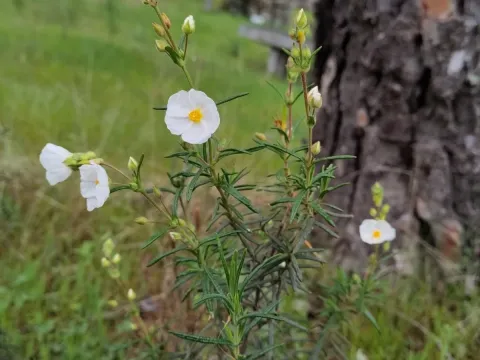
Halimium umbellatum
Halimium umbellatum
Halimium umbellatum, commonly known as a member of the rock rose family (Cistaceae), is a resilient evergreen shrub native to the Mediterranean region. It thrives in its natural habitat across the Iberian Peninsula and parts of North Africa, often found on arid, rocky slopes and sandy heathlands.
What the section contains
Halimium umbellatum
This shrub requires full sun exposure to reach its full flowering potential. It is exceptionally drought-tolerant once established, making it a perfect candidate for xeriscaping or low-maintenance gardens. It prefers poor, sandy, or gravelly soils with excellent drainage, as it cannot tolerate waterlogged conditions.
Cultivation success depends heavily on mimicking its natural environment. The soil should be neutral to slightly acidic, and the drainage must be impeccable to prevent root rot, which is the most common cause of failure. In colder climates, the plant requires protection from severe frost and wind.
Botanically, Halimium umbellatum is characterized by its compact, rounded growth habit, typically reaching 40 to 60 centimeters in height. Its lance-shaped, grey-green leaves provide a year-round backdrop for the delicate white, yellow-centered flowers that appear in umbel-like clusters during late spring and early summer.
In terms of practical application, this plant is widely used in rock gardens, gravel borders, and Mediterranean-themed landscaping. Its ability to thrive in thin, infertile soils makes it an excellent choice for stabilizing banks or filling spaces in garden beds where more demanding species would fail.
The primary threat to the health of Halimium umbellatum is moisture-related disease, specifically root rot. When planted in heavy clay soils or areas with poor water runoff, the root system is highly susceptible to fungal pathogens that thrive in consistently damp environments.
Pests such as aphids and spider mites can occasionally affect the plant, particularly if it is stressed by extreme drought or poor air circulation. Regular inspection during the growing season is advised, and infestations should be addressed promptly with appropriate biological or chemical treatments.
Fungal issues like powdery mildew may arise if the plant is grown in areas with high humidity and insufficient airflow. Proper spacing between plants and selective pruning after the flowering season can significantly improve ventilation and reduce the incidence of fungal spores settling on the foliage.
Verticillium wilt is another potential risk that can lead to sudden plant decline. Prevention centers on selecting disease-free planting sites and avoiding deep mechanical cultivation that could damage the roots and create entry points for soil-borne pathogens.
To ensure long-term health, growers should focus on maintaining a dry crown and well-drained root zone. Applying a layer of grit or decorative gravel mulch around the base of the plant effectively keeps the foliage away from soil moisture and protects the plant against several common threats.