
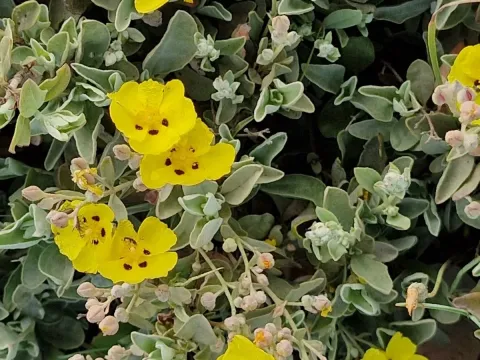
Halimium halimifolium
Halimium halimifolium
Halimium halimifolium is an evergreen shrub belonging to the Cistaceae family. Native to the Mediterranean region, particularly the Iberian Peninsula and North Africa, this plant is well-adapted to harsh, sun-drenched environments.
What the section contains
Halimium halimifolium
The plant thrives in full sun exposure, which is essential for maintaining its dense habit and promoting prolific flowering. It is an excellent candidate for xeriscaping, as it requires minimal supplemental irrigation once the root system is well-established.
Soil requirements for Halimium are relatively simple: it demands excellent drainage above all else. It performs optimally in sandy, stony, or rocky soils, mimicking its natural habitat where water drains away rapidly.
This shrub is highly valued for its aesthetic appeal, featuring bright yellow flowers that bloom in late spring and early summer. Its silver-green foliage provides year-round interest, making it a staple in Mediterranean-style gardens.
Agricultural management involves light pruning after flowering to encourage a bushy growth habit and prevent the plant from becoming woody and sparse. Fertilizer should be applied sparingly, as the plant is adapted to nutrient-poor soils.
The primary threat to the health of Halimium halimifolium is root rot, typically caused by waterlogged soil. Proper drainage is the most effective preventative measure against this fatal condition.
While relatively pest-resistant due to aromatic oils in its leaves, the plant may occasionally attract aphids or spider mites, especially in greenhouse or nursery environments where air circulation might be limited.
Verticillium wilt is another potential concern for members of the Cistaceae family. To manage this risk, gardeners should avoid planting in soil that has previously hosted susceptible vegetable crops like tomatoes or potatoes.
Regular maintenance, including the removal of dead or crossing branches, ensures better airflow through the canopy. This reduces the risk of fungal leaf spot pathogens proliferating during humid spells.
Integrated pest management should be prioritized over chemical treatments. Maintaining the plant's natural vigor through proper irrigation and location selection usually prevents most pest and disease outbreaks effectively.