
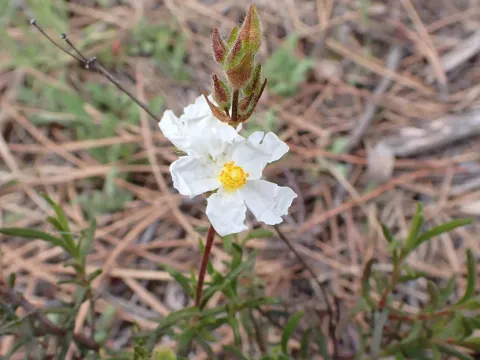
Halimium viscosum
Halimium viscosum
Halimium viscosum is a perennial evergreen subshrub belonging to the Cistaceae family. Native to the Iberian Peninsula, this plant is well-adapted to rocky and sandy habitats characteristic of Mediterranean environments.
What the section contains
Halimium viscosum
Botanically, the plant is recognized by its sticky, glandular foliage which helps the plant reduce transpiration in its native hot and arid climate. During the flowering period, it produces striking yellow flowers, often adorned with a darker basal spot.
For successful cultivation, the plant requires excellent drainage and a sunny location. It thrives in poor, rocky, or sandy soils and is highly intolerant of wet, heavy, or waterlogged conditions, which lead to root degradation.
Climate requirements include high solar radiation and protection from severe frost. While it exhibits significant drought tolerance once established, it needs careful monitoring of soil moisture during its first year of growth in a garden setting.
Agricultural and gardening management focuses on annual pruning to maintain a dense, bushy structure. Removing spent flower stems encourages new growth and helps prevent the plant from becoming excessively woody or sparse at the base.
The primary threats to this species are soil-borne pathogens, particularly root rot, triggered by poor soil aeration or excessive irrigation. Ensuring a site with high permeability is the most effective way to prevent these fungal issues.
Pests are generally not a significant problem for Halimium viscosum in open garden settings. However, aphids or spider mites may occasionally appear on indoor or greenhouse-grown specimens, requiring standard integrated pest management practices.