
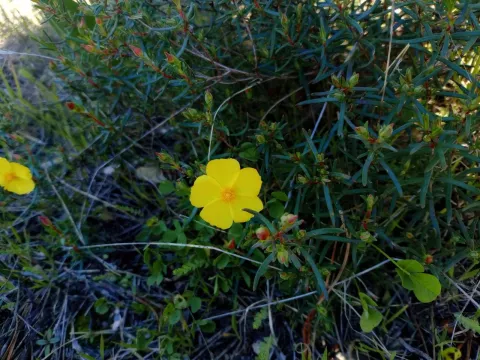
Halimium
Halimium
Halimium is a genus of evergreen subshrubs belonging to the Cistaceae family. These plants are highly valued in horticulture for their ornamental properties, compact growth habit, and abundant blooming during the spring and summer months.
What the section contains
Halimium
In their native habitat, Halimium species are found in Mediterranean regions, ranging from Europe to North Africa. They naturally thrive in open, sunny locations with well-drained soils, reflecting their adaptation to arid environmental conditions.
Successful cultivation requires sandy or loamy soils with a neutral or slightly acidic pH. The plant cannot tolerate waterlogging, making a high-quality drainage layer an essential requirement when planting in open ground or garden containers.
The culture exhibits significant drought tolerance, although it requires moderate watering during the active growth phase. Halimium is sensitive to harsh winters; therefore, in temperate climates, it requires reliable winter protection or should be cultivated as a greenhouse plant.
The primary use of Halimium is in ornamental gardening. It is widely employed in rock gardens, for creating alpine landscapes, and for forming dense, flowering borders within Mediterranean-style garden designs.
Excessive moisture around the roots is the primary threat to Halimium, often triggering root rot. Insufficient soil aeration and inadequate drainage are the main causes of sapling mortality during periods of heavy rainfall.
In greenhouses or densely planted areas, the plants may become susceptible to powdery mildew. To prevent the spread of fungal spores, it is vital to ensure good air circulation and avoid high humidity levels in the root zone.
Pests rarely cause significant damage to healthy specimens, although aphids may occasionally infest weakened plants. In cases of localized infestation, the application of systemic insecticides or biological control agents is recommended.
During periods of rapid temperature fluctuations combined with high humidity, there is an increased risk of gray mold (Botrytis). Affected parts of the plant should be pruned immediately to prevent the infection from spreading to healthy shoots.
Disease prevention is based on maintaining a strict watering and fertilization regimen. Avoid excessive use of nitrogen-rich fertilizers, as this reduces the shrub's natural resistance to pathogens and hinders wood hardening before the winter dormancy period.