
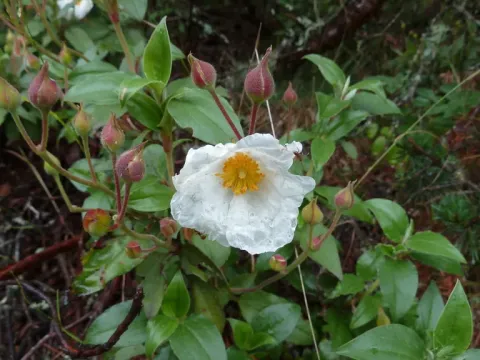
Laurel-leaved rockrose
Cistus laurifolius
Sowing of Cistus laurifolius is typically performed in early spring, once the soil has warmed sufficiently to support germination and early root development.
What the section contains
Laurel-leaved rockrose
Seeds benefit significantly from a period of cold stratification, which helps to break dormancy and ensures a more uniform emergence of seedlings in the seedbed.
For best results, sow seeds in a well-draining, sandy-loam mix at a shallow depth, covering them lightly with fine soil to maintain adequate moisture levels.
Seedling development is gradual; therefore, maintaining a stable, sheltered environment is crucial during the first few weeks of growth in a nursery setting.
Once seedlings have developed a sturdy root system and reached an appropriate size, they can be transplanted into their final production rows or garden positions.
The Laurel-leaved rockrose is a member of the Cistaceae family, naturally adapted to dry, sun-drenched environments with well-drained, rocky soils.
Full sun exposure is essential for this species, as it directly correlates with the plant's ability to produce high-quality resins and aromatic compounds.
The plant thrives in nutrient-poor, slightly acidic to neutral soils, making it an excellent candidate for marginal lands where other crops might struggle.
While extremely drought-tolerant once established, young plants require supplemental irrigation during their first growing season to ensure deep root penetration.
Soil aeration is a vital factor; avoid heavy clays that retain moisture for long periods, as the species is highly susceptible to root rot in saturated conditions.
The primary economic value of Cistus laurifolius lies in the production of labdanum, a sticky resin harvested for the fragrance and cosmetic industries.
Commercial yields are generally achieved from mature plants, typically starting from the third or fourth year of plantation management.
Production levels are highly dependent on the intensity of the summer heat, as higher temperatures stimulate the secretion of the protective aromatic resin.
Optimizing plant spacing allows for efficient biomass harvesting while ensuring that individual bushes have enough resources to regenerate after pruning.
Processed extracts are essential ingredients in high-end perfumery, serving as a long-lasting fixative base for various fragrance profiles.
The most significant threat to Cistus plantations is poor drainage, which rapidly leads to fungal pathogens attacking the crown and root system.
In humid or stagnant air conditions, plants may become vulnerable to powdery mildew, which can significantly reduce the vitality and aesthetic quality of the foliage.
Pests such as aphids and spider mites can occasionally affect the young shoots, although these are usually manageable through proper plantation hygiene.
Good air circulation is the best preventative measure, achieved by maintaining correct planting density and removing any dead or diseased wood regularly.
Integrated pest management strategies are preferred over heavy chemical usage, as the plant's sensitivity to synthetic inputs can lead to leaf burn and toxicity.
Harvesting is typically scheduled for mid-summer, selecting periods when the resinous content of the leaves and stems is at its absolute annual peak.
Techniques involve careful manual or mechanical pruning of the current year's growth, ensuring that the structural framework of the plant remains intact.
Rapid transport to drying or extraction facilities is necessary to prevent degradation of the volatile oils and potential spoilage of the resinous harvest.
Drying must take place in an area with excellent ventilation and protection from direct sunlight to preserve the integrity of the aromatic profile.
After reaching the desired moisture content, the biomass is milled and processed to extract the valuable resins required by the secondary production sector.