
Hudsonia
Hudsonia
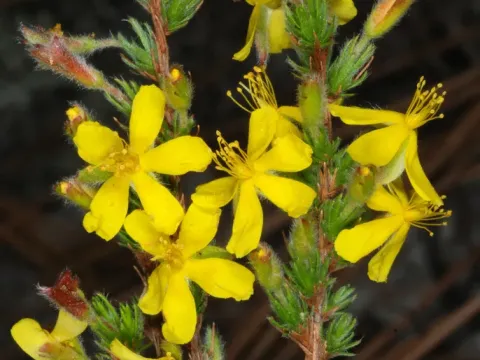
Hudsonia, commonly known as golden heather, is a genus of small, evergreen, mat-forming shrubs within the Cistaceae family. Despite its common name, it is not a true heather but a distinct member of the rock-rose family, characterized by its bright yellow, ephemeral flowers.
What the section contains


Hudsonia
Native to North America, Hudsonia species are typically found in sandy coastal dunes, barrens, and pine forests. Their evolutionary history has equipped them to thrive in nutrient-poor, acidic soils where competition from larger flora is minimal.
Successful cultivation of Hudsonia depends entirely on replicating its native habitat. The soil must be extremely well-drained, sandy, and acidic. Heavy clay soils or those that retain moisture are generally fatal to the plant, leading to inevitable root system failure.
As a sun-loving plant, Hudsonia requires full, unobstructed solar exposure to maintain its dense, cushion-like habit. If grown in partial shade, the plant tends to become leggy and loses the intense color and profusion of its blossoms, significantly reducing its ornamental value.
Regarding horticultural use, Hudsonia is prized for its ability to stabilize loose soil and sand in rock gardens or xeriscapes. It requires minimal fertilization and maintenance, provided the drainage and light conditions are strictly met during the planting stage.
The most significant threat to Hudsonia is root rot (pathogenic fungi) caused by poor soil drainage or excessive irrigation. The plants are highly intolerant of "wet feet" and require a dry, airy root environment to prevent bacterial and fungal colonization of the root tissues.
While Hudsonia is generally resistant to most common garden pests, environmental stress caused by humidity or lack of airflow can predispose the plant to infestations by sap-sucking insects. Prevention relies on proper spacing and strictly regulating soil moisture levels.