
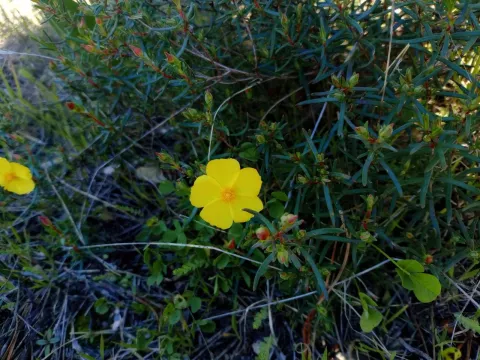
Halimium calycinum
Halimium calycinum
Halimium calycinum is an evergreen shrub belonging to the Cistaceae family. Native to the Iberian Peninsula, specifically Portugal and southwestern Spain, it thrives in sandy, well-draining soils under Mediterranean climatic conditions.
What the section contains
Halimium calycinum
In terms of agricultural and horticultural requirements, the plant demands full sun exposure and excellent soil drainage. It is highly intolerant of waterlogged conditions, making well-aerated, rocky, or sandy substrates essential for its survival and growth.
The plant is adapted to arid environments, possessing tough, leathery leaves that minimize water loss. While it shows good drought tolerance once established, it benefits from moderate watering during the initial growth stages, especially in spring.
Botanically, it forms a small, bushy habit, typically not exceeding 50–60 cm in height. Its signature yellow, cup-shaped flowers, often with a darker basal spot, appear in late spring, making it a popular choice for rock gardens and dry, sunny borders.
Cultural practices involve minimal intervention. Pruning after the flowering period is recommended to encourage bushier growth and prevent the shrub from becoming too woody or sparse at the base over time.
The primary threat to Halimium calycinum is root rot caused by stagnant water in the root zone. Ensuring a high-quality drainage system is the most effective way to prevent these detrimental fungal infections.
Pests are generally not a major concern, although the plant may occasionally host aphids or spider mites, particularly in restricted airflow environments. Keeping the plant in an open, well-ventilated location effectively minimizes these risks.