
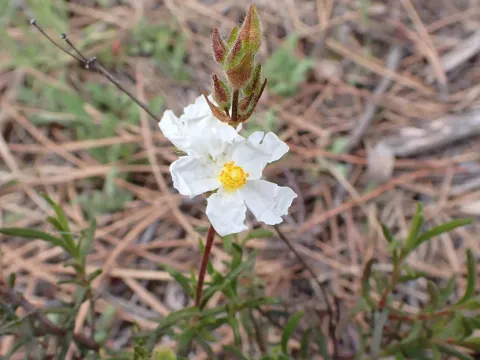
Halimium verticillatum
Halimium verticillatum
Halimium verticillatum is a charming evergreen semi-shrub belonging to the Cistaceae family. Native to the Iberian Peninsula, this plant is well-adapted to Mediterranean climates characterized by long, dry summers and mild, wet winters.
What the section contains
Halimium verticillatum
The plant thrives in well-drained, sandy, or rocky soils. It is highly intolerant of waterlogged conditions, which makes site preparation critical. Incorporating gravel into the soil mix is recommended to ensure that moisture drains away from the roots effectively.
It demands full sun exposure to flourish and maintain its compact, dense habit. In low-light environments, the shrub loses its structural integrity, develops leggy stems, and produces fewer flowers, diminishing its overall aesthetic value in a landscape.
Botanically, it is distinguished by its verticillate (whorled) leaf arrangement and bright yellow, five-petaled flowers that bloom in late spring. These features make it a popular choice for rock gardens and Mediterranean-style landscaping.
The main agricultural and horticultural use of this plant is as an ornamental ground cover for xeriscaping. It is highly valued for its ability to grow in poor soils where other plants struggle, requiring minimal maintenance once established.
Root rot is the most significant threat to Halimium verticillatum, usually caused by poor soil drainage and excessive soil moisture. Once root decay sets in, the plant becomes difficult to recover, making prevention the best strategy.
Aphids can occasionally colonize young, tender shoots during the active growing season. While they rarely kill the plant, heavy infestations can cause stunted growth and leaf distortion, negatively affecting the plant's appearance.
Fungal leaf spots may occur in climates with high humidity if there is insufficient air circulation. To prevent this, spacing plants adequately and avoiding overhead irrigation is vital for keeping the foliage dry and healthy.
If pests or diseases are identified, manual removal of infected branches is the first line of defense. The use of systemic pesticides should be avoided if possible to protect beneficial insects, such as bees, which are attracted to the flowers.
Maintaining a healthy, dry layer of mulch, such as stone chips or grit, around the base of the plant can significantly reduce the incidence of fungal issues. This mimics the plant's natural habitat and keeps the base dry.