
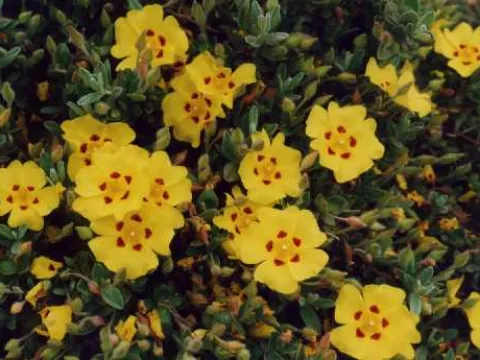
Halimium alyssoides
Halimium alyssoides
Halimium alyssoides is an evergreen shrub belonging to the Cistaceae family. Native to the Iberian Peninsula, specifically in Spain and Portugal, this plant is well-adapted to rocky, Mediterranean environments where drainage is excellent and sunlight is abundant.
What the section contains
Halimium alyssoides
Botanically, it is recognized by its silver-green pubescent foliage and vibrant yellow flowers. The fine hairs on the leaves serve as a protective mechanism, reflecting solar radiation and minimizing transpiration during hot summer months.
This species requires full sun to thrive and reach its full aesthetic potential. It is essential to plant it in a location that receives at least six to eight hours of direct sunlight daily to prevent weak, spindly growth patterns.
The soil must be light, well-draining, and slightly acidic to neutral. Heavy clay soils that retain moisture are generally unsuitable unless amended with significant amounts of grit or sand to improve the porosity of the planting site.
In terms of climate, Halimium alyssoides prefers mild winters and hot, dry summers. While it exhibits good drought tolerance once established, young plants require consistent monitoring and occasional watering during their first year of growth.
Root rot is the most significant threat to the health of this shrub. This condition is almost always a result of poor soil drainage or excessive irrigation, which damages the fine root hairs and prevents oxygen uptake.
Aphids can infest the soft new growth in the spring, causing leaf curling and stunted development. If populations are found, they should be managed with organic insecticidal soaps or by releasing beneficial insects.
Spider mites can be problematic during particularly dry and hot periods. Maintaining proper spacing between plants ensures better air circulation, which can reduce the likelihood of heavy mite infestations.
Powdery mildew may occur if the plants are situated in areas with high humidity and insufficient airflow. Proper pruning practices are vital to keep the canopy open and healthy, reducing the chance of fungal colonization.
Winter damage, often manifesting as branch dieback, occurs if the plant is exposed to excessive wetness combined with freezing temperatures. Ensuring the site is well-drained and sheltered from harsh winds significantly mitigates this risk.