
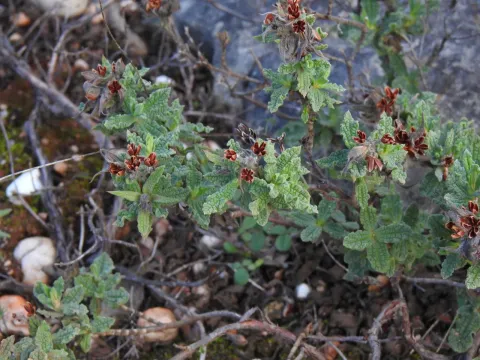
Curly-leaved rockrose
Cistus crispus
The propagation of Cistus crispus is typically initiated in early spring, once the risk of severe night frosts has completely subsided in the region.
What the section contains
Curly-leaved rockrose
Seeds have a naturally tough coat, so growers often employ pre-sowing scarification or a cold stratification process to improve germination rates significantly.
Seeds should be sown in a light, well-draining substrate, barely covered with soil, as they require light to trigger the germination process effectively.
Maintaining a consistent temperature between +18 and +22 degrees Celsius is crucial during the first few weeks to ensure uniform seedling emergence.
For commercial scale propagation, semi-hardwood cuttings taken in summer are often preferred as they establish roots faster and ensure genetic consistency.
Cistus crispus belongs to the Cistaceae family and is highly adapted to the hot, dry climates typical of Mediterranean ecosystems and coastal regions.
This species requires full, direct sunlight throughout the day to thrive and to maximize the production of aromatic essential oils and plant resins.
The ideal soil for this crop is rocky, sandy, or poor-quality soil with excellent drainage, as the plant is highly susceptible to root decay in damp conditions.
It is remarkably drought-tolerant, surviving long periods without water, yet it remains extremely sensitive to high humidity and waterlogged soil in winter.
In temperate zones, it is essential to cultivate this plant in containers or greenhouses, as it cannot survive freezing temperatures for prolonged periods.
Root rot is the most common threat to rockrose plantations, usually caused by overwatering or poor drainage systems during the wetter months of the year.
Powdery mildew can affect the foliage if air circulation is poor, necessitating correct spacing between plants to prevent the accumulation of moisture.
Pests such as aphids and spider mites are frequent visitors, especially in dry and warm environments, and can significantly impact the quality of new growth.
Maintaining a dry environment around the base of the plant is the most effective cultural method to mitigate risks from fungal and bacterial pathogens.
For pharmaceutical or cosmetic grade crops, integrated pest management practices are prioritized to ensure the final product meets high purity standards.
The harvesting of the foliage and flowers is timed for the peak of the flowering season when the concentration of labdanum resin is at its highest.
Harvested materials must be dried carefully in shaded, well-ventilated areas to prevent the loss of volatile oils due to heat or direct sunlight exposure.
The primary economic output is labdanum, a sticky resin widely used in the perfume industry as a fixative to provide depth and longevity to scents.
In traditional medicine, parts of the plant are utilized for their antimicrobial and astringent properties, often formulated into various skincare products.
Beyond its industrial applications, the plant serves as a vital component in xeriscaping and sustainable landscape design due to its aesthetic appeal.