
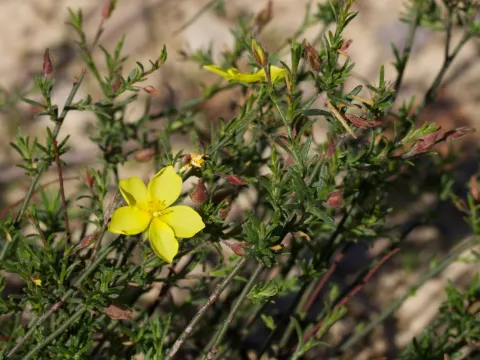
Crocanthemum
Crocanthemum
Crocanthemum, a genus within the Cistaceae family, requires specific conditions for successful germination. Sowing is typically performed in late autumn, allowing the seeds to undergo natural cold stratification throughout the winter months.
What the section contains

Crocanthemum
The seeds are light-sensitive, meaning they should be sown on the surface of the soil rather than buried. Covering them with a thin layer of fine sand or grit is sufficient to maintain moisture without obstructing light access.
For controlled propagation, greenhouses can be used, maintaining a temperature range between 18 and 22 degrees Celsius. Constant, gentle moisture is crucial, while preventing the substrate from becoming waterlogged.
Once seedlings have developed their first true leaves, they can be hardened off and transplanted into their permanent location. Proper spacing is essential to prevent overcrowding and ensure adequate airflow.
Natural reseeding is a common occurrence in stable populations of Crocanthemum, which farmers can leverage to maintain continuous cover on suitable sandy or rocky terrain.
Crocanthemum thrives in full sun, making it an excellent candidate for open fields and sunny slopes. Shade significantly reduces the quality and vigor of the plants, leading to leggier growth.
The soil must be exceptionally well-draining. Sandy, gravelly, or rocky soil types are preferred, as these mimic the plant's natural habitat and minimize the risk of root pathogens.
This crop is highly adapted to arid conditions. Once established, it requires minimal irrigation, as excessive watering often proves detrimental to its long-term health and development.
Regarding fertilization, minimal input is required. High-nitrogen fertilizers should be avoided, as they promote excessive vegetative growth at the expense of floral development and natural resilience.
The ideal environment for Crocanthemum is characterized by moderate seasonal temperature fluctuations and a low-humidity climate, which helps in preventing fungal proliferation.
Fungal issues, particularly those associated with damp soil and poor ventilation, represent the primary threat to the health of Crocanthemum crops.
Powdery mildew is a frequent challenge during periods of cool, humid weather. Maintaining proper spacing between plants helps to reduce humidity levels around the foliage, effectively minimizing this risk.
Pests like spider mites can be problematic in hot, dry environments. These insects thrive on stressed plants, necessitating monitoring and, if necessary, the application of horticultural oils.
Root-knot nematodes can also be a concern in infested soils, causing stunted growth and poor nutrient uptake in the crop.
- Regular monitoring for signs of localized leaf discoloration.
- Removal and destruction of infected plant debris to prevent spore spread.
- Strategic irrigation that avoids wetting the leaves directly.