
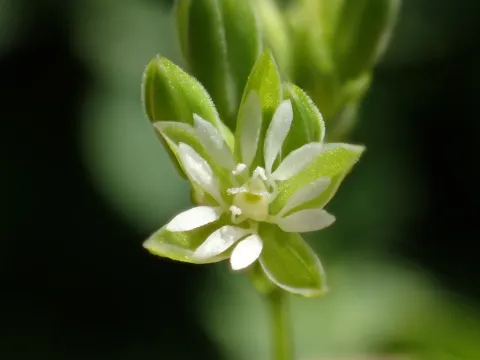
Drymaria
Drymaria
Drymaria belongs to the Caryophyllaceae family and is recognized for its significant adaptability across various ecological niches. The germination of seeds occurs predominantly during the spring months when soil temperatures stabilize within the range of 12–15 degrees Celsius.
What the section contains


Drymaria
Successful establishment of the culture requires adequate soil moisture during the initial phases of germination. Drymaria seeds possess long-term dormancy capabilities, allowing them to remain viable in the soil seed bank for extended periods before emerging.
Field studies indicate that the crop exhibits a high degree of competitive vigor, quickly forming a dense canopy in optimal conditions. Proper sowing depth, generally shallow at 0.5–1 cm, is crucial for ensuring rapid emergence and uniform development.
The timing of sowing or the emergence period is a critical factor for agricultural management. Early removal or disturbance is often required to prevent the crop from dominating the field environment and exhausting soil resources.
Agronomic practices focusing on early-season cultivation are effective in reducing the seed bank. Mechanical intervention before the onset of flowering is the standard recommended approach for managing plant populations.
Drymaria flourishes in well-drained, nutrient-rich soils with a pH ranging from neutral to slightly acidic. It is particularly fond of areas that receive consistent moisture, making it common in irrigated agricultural landscapes and lowland zones.
The plant exhibits high light tolerance, performing best in full sun but maintaining growth in partial shade conditions. This flexibility contributes to its ability to survive in various field configurations and crop sequences.
In terms of temperature, Drymaria is moderate and thrives in temperate climates. While it can withstand fluctuations, extreme frost or prolonged heatwaves will significantly impede its physiological functions and overall biomass production.
Maintaining proper soil aeration is essential for optimal growth. High levels of soil compaction tend to restrict root development and limit the plant's ability to access essential minerals from deeper soil layers.
Agricultural management should include a mix of structural practices and strategic soil cultivation. Minimizing water stagnation and ensuring proper field drainage are key to preventing the over-proliferation of this botanical species.
While often treated as a wild species, Drymaria can produce substantial biomass when favorable growing conditions are present. Its productivity is directly tied to the availability of nitrogen and phosphorus in the soil profile.
Under optimal agricultural practices, the biomass of the crop can be used as green manure if managed correctly before seed set. This contributes to soil enrichment, although caution is needed to avoid seed dispersal into the field.
The yield potential is highly variable depending on climate, soil quality, and the level of competition from neighboring crops. Data shows that in nutrient-dense environments, Drymaria exhibits rapid growth cycles.
Measurement of yield in terms of dry matter involves harvesting the plant at its peak vegetative phase. This phase occurs just before the transition to the reproductive stage, ensuring maximum nutrient uptake.
Effective resource management, including targeted irrigation and timely cultivation, can influence the development of the plant mass. Proper planning ensures that the crop maintains a controlled footprint within the agricultural system.
Drymaria is susceptible to various fungal pathogens, particularly in high-humidity environments. Powdery mildew is the most common disease, which can significantly reduce the photosynthetic capacity of the foliage.
Root rot, driven by waterlogged soil conditions, poses a severe threat to the plant's survival. This condition limits nutrient transport and often leads to the chlorosis of leaves and general stunted development.
Insect pests, specifically aphids and certain types of leaf beetles, frequently target the succulent stems of the plant. These pests can cause extensive structural damage and serve as vectors for secondary bacterial infections.
Nematode pressure in the root zone can also contribute to the decline of the plant population. Such infestations are often hidden, becoming apparent only after the plant shows signs of nutrient deficiency or drought stress.
Comprehensive plant protection strategies, including both chemical and biological controls, are necessary to mitigate these threats. Regular monitoring and integrated management help in maintaining the stability of the local agro-ecosystem.