
Drymaria villosa
Drymaria villosa
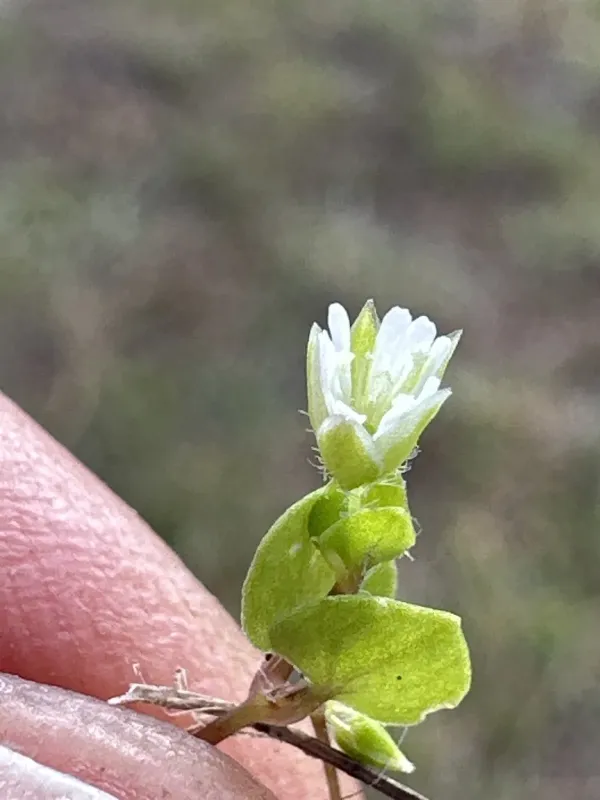
Description
Sowing dates
Drymaria villosa exhibits a high reproductive capacity, with seeds capable of germinating throughout the growing season whenever moisture levels are adequate.
In cultivation settings, seeds are typically sown in spring once soil temperatures reach a consistent range of 15 to 18 degrees Celsius for optimal germination.
The seeds are small and require shallow placement, as they benefit from surface-level light exposure to trigger successful seedling emergence.
Due to the seed bank potential in the soil, staggered planting or systematic monitoring of emergence patterns is recommended to manage density effectively.
Soil moisture is the primary driver of germination speed, thus irrigation is often necessary immediately after seeding to ensure uniform establishment across the field.
Growing requirements
As a member of the Caryophyllaceae family, Drymaria villosa thrives in fertile, well-draining soils rich in organic matter and essential nutrients.
The species displays notable adaptive plasticity, successfully colonizing both full-sun environments and shaded areas with high atmospheric humidity.
Consistent irrigation is vital for the plant's physiological development, as it is highly sensitive to prolonged drought and excessive heat stress.
Neutral to slightly acidic soil pH is ideal for maintaining the nutrient uptake balance required for the rapid expansion of this herbaceous plant.
Regular cultivation of the topsoil layer is essential in an agronomic context to provide aeration and disrupt the shallow, spreading root systems.
Main diseases and pests
The plant is susceptible to various fungal pathogens, particularly in dense stands where air circulation is poor and humidity levels remain high.
Pests such as spider mites and aphids are known to colonize the foliage during hot, dry spells, which can lead to significant vigor reduction.
Root rot represents a critical threat during wet seasons, particularly in soil types that are prone to waterlogging and inadequate drainage.
Integrated pest management strategies should include early scouting and the use of approved chemical or biological control agents to mitigate outbreaks.
- Routine inspection for early symptoms of foliar chlorosis.
- Optimizing plant spacing to facilitate airflow and reduce fungal pressure.
- Implementing crop rotation to break the life cycle of soil-borne pests.
Harvesting
Harvesting for biomass should occur prior to the onset of mass seed maturation to prevent the uncontrolled dispersal of seeds across the production area.
Post-harvest processing requires immediate drying of the biomass to prevent decay, as the succulent stems are highly prone to bacterial and fungal spoilage.
When managed as a ground cover, the plant is incorporated into the soil at the peak of vegetative growth to enhance organic matter content.
Mechanical harvesting requires low-profile equipment to effectively capture the trailing stems that grow close to the soil surface.
Care must be taken to remove vegetative fragments during harvest, as these can easily re-root and lead to rapid regrowth if left in the field.