
Drymaria cordata
Drymaria cordata (L.) Willd. ex Schult.
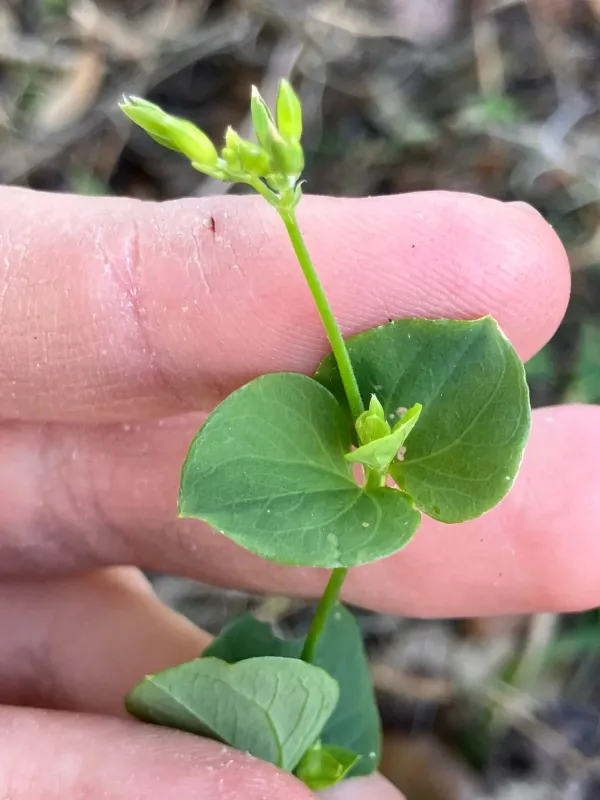
Description
Growing requirements
Drymaria cordata is a herb belonging to the Caryophyllaceae family. Known in many tropical regions, it acts as a spreading ground cover that protects the soil from erosion and helps maintain soil moisture balance in agroforestry systems.
The plant is native to tropical America but has naturalized throughout tropical regions of Africa and Asia. It typically thrives in moist, shaded environments, frequently found in forest clearings, coffee plantations, and humid agricultural zones where competition for light is reduced.
For optimal growth, Drymaria cordata requires well-drained, fertile soil rich in organic matter. It prefers a consistent supply of moisture, making it sensitive to prolonged drought conditions, while also failing to thrive in direct, intense sunlight which can scorch its delicate foliage.
The ideal temperature range for this species is between 20°C and 30°C. It is strictly tropical, meaning it cannot survive freezing conditions. In agricultural settings, it is often managed as a spontaneous cover crop that requires little intentional sowing but benefits from periodic thinning.
Agrotechnical management involves monitoring its rapid vegetative expansion. Because the plant propagates easily via rooting nodes on its stems, it can become invasive if left unmanaged, potentially competing with primary food crops for nutrients and space in the rhizosphere.
Main diseases and pests
The primary threats to Drymaria cordata include fungal pathogens such as leaf spot and root rot, especially in high-humidity areas with poor air circulation. Overcrowding of the plants significantly increases the risk of these diseases spreading throughout the population.
Pests such as aphids and spider mites are common problems. These insects colonize the succulent stems and leaves, extracting nutrients and causing wilting, which reduces the plant's ability to act as a effective ground cover.
Root system damage often occurs in waterlogged soils, which promotes the growth of anaerobic bacteria and fungi. Maintaining a balance between soil hydration and oxygenation is essential for plant health, particularly during rainy seasons.
Cultural control methods, such as mulching around the edges of the cultivated area or manual weeding, are the most effective ways to manage the plant's footprint. Chemical control should be avoided unless absolutely necessary to prevent the contamination of soil and surrounding crops.
Monitoring the health of the foliage and stems is vital for early detection of pest or disease outbreaks. Removing affected plant debris promptly helps to minimize the inoculum load and prevents the spread of pathogens to healthy parts of the stand.