
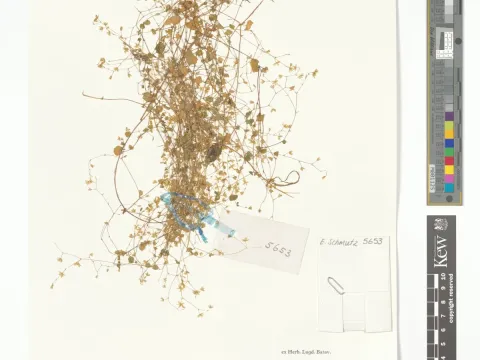
Drymaria hirsuta
Drymaria hirsuta
Drymaria hirsuta is a herbaceous plant belonging to the Caryophyllaceae family. It originates from tropical and subtropical mountainous regions, where it thrives in moist, high-altitude environments characterized by consistent temperatures and shade.
What the section contains
Drymaria hirsuta
Botanically, the species is distinguished by its hirsute (hairy) stems and spreading growth habit. The small, opposite leaves create a dense, creeping mat that serves as an excellent ground cover in suitable climate zones, effectively minimizing soil erosion.
The plant requires well-draining, moisture-retentive soil rich in organic matter to flourish. Ideally, the pH should be slightly acidic to neutral to ensure optimal nutrient uptake for the sensitive root system, which does not tolerate heavy, compacted soils.
Climate conditions are critical for this species; it prefers cool to moderate temperatures and high humidity levels. In warmer climates, it must be grown in shade or semi-shaded areas to prevent dehydration and chlorophyll damage from intense solar radiation.
Agronomic management involves maintaining consistent moisture levels and providing periodic fertilization with low-concentration liquid nutrients. Because of its spreading nature, it can be propagated through cuttings or division, making it manageable for controlled cultivation.
The most significant threats to Drymaria hirsuta include fungal diseases such as root rot and stem blight, primarily caused by waterlogged soils or inadequate aeration. These conditions quickly lead to necrosis in the succulent parts of the plant.
Pests such as aphids and spider mites are frequent invaders, especially in glasshouse environments where dry air facilitates their reproduction. Regular inspection of the foliage is essential to detect early infestations before they spread across the crop.
Managing humidity is the best defense against pathogens; maintaining air circulation helps keep the foliage dry and healthy. In cases of severe infection, targeted fungicide application is necessary to preserve the plant's health.
Slugs and snails can also cause substantial physical damage to the leaves. Growers often use physical barriers or organic baits to protect the vulnerable ground-level tissues from nocturnal herbivores.
To ensure long-term productivity, integrated pest management (IPM) should be applied, focusing on preventive care rather than curative chemical intervention. This approach preserves the biodiversity of the soil and protects the delicate structure of the plant.