
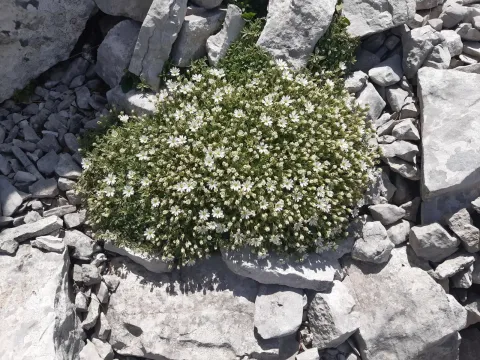
Dinaric mouse-ear
Cerastium dinaricum
The Dinaric mouse-ear (Cerastium dinaricum) is a rare perennial herb belonging to the Caryophyllaceae family. It is endemic to the high mountain ranges of the Dinaric Alps, where it typically colonizes rocky outcrops and limestone screes at higher altitudes.
What the section contains
Dinaric mouse-ear
Botanically, the plant is distinguished by its dense, cushion-like growth habit, which is an evolutionary adaptation to harsh alpine conditions. Its leaves are generally small and pubescent, helping the plant to conserve moisture and protect itself from intense solar radiation found at high elevations.
In terms of cultivation requirements, Cerastium dinaricum demands extremely well-draining, gritty, or rocky soils. A neutral to alkaline pH is preferred, mirroring its natural calcareous habitats. Any waterlogging in the root zone is strictly prohibited, as it leads to rapid physiological decline.
The species thrives in bright, full-sun exposure and requires a cool environment to maintain its compact, healthy growth. Adequate air circulation is paramount, as the plant is adapted to the breezy conditions of its native mountain slopes and does not tolerate stagnant, humid air.
Economically and horticulturally, this plant is used exclusively as a specialty item for alpine gardens and rockeries. Its aesthetic value lies in its tidy, carpet-forming structure, making it a sought-after specimen for collectors interested in high-altitude biodiversity.
The primary threats to Cerastium dinaricum are related to improper horticultural care, particularly excess moisture. High levels of humidity combined with warm temperatures frequently invite fungal pathogens, leading to crown rot and root rot which are fatal to the specimen.
Pest pressures primarily include slugs and snails that target new, succulent growth. Integrated pest management strategies, such as physical barriers or environmentally friendly deterrents, are highly recommended to protect the integrity of the plant cushions.
Powdery mildew can become a significant issue if the plants are situated in areas with poor airflow or are planted too densely. Maintaining adequate spacing between specimens is a crucial preventative measure to ensure proper ventilation throughout the growing season.
Weed competition poses a significant risk to the plant's survival. Due to its slow growth rate, the Dinaric mouse-ear can be easily overshadowed and outcompeted by invasive weeds, necessitating manual weeding and diligent maintenance of the surrounding growing area.
By mimicking the plant's native ecological niche through careful soil preparation and exposure control, growers can minimize these threats, significantly enhancing the longevity and disease resistance of the plant.