
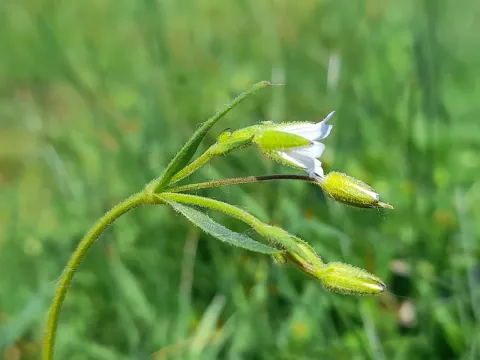
Doubtful mouse-ear
Cerastium dubium
Doubtful mouse-ear (Cerastium dubium) is an annual herbaceous plant belonging to the Caryophyllaceae family. This species is taxonomically distinct and shares common traits with other members of its genus, though it possesses unique physiological adaptations that allow it to thrive in specific habitats.
What the section contains
Doubtful mouse-ear
Originating primarily from the temperate zones of Europe and Western Asia, this plant occupies a niche in open, well-lit environments. It is frequently observed in meadows, riverbanks, and stony terrains where soil disturbance creates conditions suitable for its short life cycle.
Botanically, Cerastium dubium is characterized by glandular hairs covering its stem and foliage, which function to reduce transpiration. The leaves are typically lanceolate, and the flowers exhibit the characteristic white, bifid petals commonly found in the genus Cerastium.
Soil requirements for this plant focus on drainage and light structure. It is rarely found in heavy, waterlogged clays; instead, it prefers sandy or gravelly soils with a neutral or slightly alkaline pH level, which ensures optimal root respiration and nutrient availability.
In terms of agricultural use, this species is not cultivated as a commercial crop. Its value is predominantly ecological, as it serves as a natural component of local flora, providing early-season nectar for pollinators and contributing to the stability of sparse vegetation zones.
The primary fungal threats to Cerastium dubium involve pathogens like powdery mildew, which thrive in humid and poorly ventilated conditions. Once infected, the plant loses its photosynthetic efficiency and may fail to produce seeds, impacting its population density.
Pests that commonly affect this plant include aphids and spider mites. These organisms feed on the nutrient-rich sap of the stems and leaves, causing structural damage. Preventive measures typically involve maintaining an environment with sufficient airflow to discourage the colonization of these pests.