
Drymaria arenarioides
Drymaria arenarioides Willd. ex Schult.
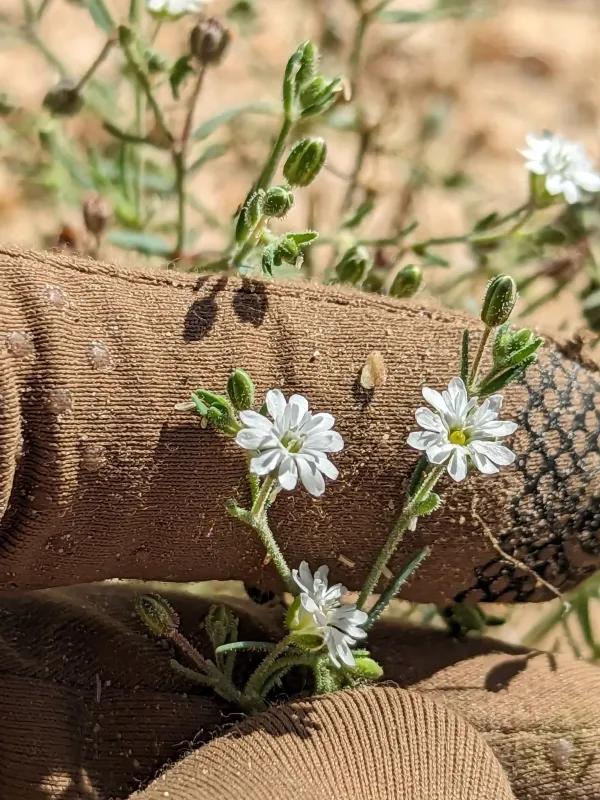
Description
Sowing dates
Drymaria arenarioides is not a cultivated crop but rather a highly invasive and toxic weed that poses significant risks to livestock in arid regions.
The plant species initiates its growth cycle primarily following seasonal rains, which are essential for the germination of its resilient seeds.
Invasion often starts in disturbed areas or overgrazed pastures where competition from native, non-toxic forage species is significantly reduced.
Seed production is prolific, ensuring that the plant can rapidly occupy empty niches in the landscape during the favorable growing season.
Effective management requires scouting during the early germination stages to eradicate the plants before they reach the flowering and seed-setting phases.
Growing requirements
The species is well-adapted to sandy or gravely soils, thriving in environments that other plants often find too harsh or nutrient-poor.
It requires high solar radiation and can tolerate extreme thermal conditions typical of the Sonoran Desert and similar arid climates.
Drainage is a critical factor, as Drymaria arenarioides prefers well-aerated substrates that prevent moisture saturation for prolonged periods.
The plant is highly responsive to soil moisture levels, expanding its range rapidly during years with above-average precipitation.
Conservation of healthy native ground cover is the primary defense strategy against the encroachment of this problematic species into agricultural land.
Main diseases and pests
The primary concern regarding Drymaria arenarioides is its potent toxicity, which causes severe and often fatal cardiovascular complications in ruminants.
The plant accumulates toxic alkaloids in its foliage, making it a persistent and dangerous threat to cattle, sheep, and goats grazing in infested areas.
There are very few natural pests or herbivores that consume this plant due to its chemical defenses, allowing it to dominate patches of land undisturbed.
Fungal pathogens may occasionally occur, but they do not serve as effective biological control agents for managing its population density.
- Sudden cardiac arrest in grazing livestock.
- Irreversible tissue damage in the heart muscle.
- Economic loss due to stock mortality in infested regions.