
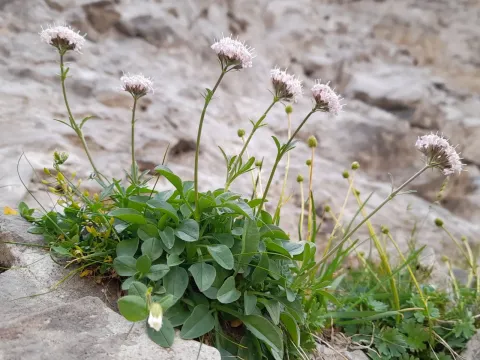
Valeriana apula
Valeriana apula
Valeriana apula is a perennial herb belonging to the Caprifoliaceae family. It is distinct from other species due to its specific ecological niche, often restricted to limestone rocky soils within the Mediterranean and Southern European regions.
What the section contains
Valeriana apula
The seeds of Valeriana apula have a low germination rate and require a period of cold stratification to break dormancy. Sowing should ideally take place in late autumn, allowing the natural winter cold to condition the seeds for spring germination.
If sowing in the spring, it is crucial to simulate winter conditions by placing the seeds in a moist substrate in a refrigerator for approximately six weeks. This process significantly increases the percentage of successful sprouts.
Seeds should be sown at a shallow depth of 0.5 cm in a light, well-draining substrate. Given the small size of the seeds, using a seed-sand mixture helps ensure an even distribution across the sowing area.
After sowing, keep the soil consistently moist but not waterlogged. The germination process is relatively slow, requiring patience and stable temperature conditions between 10°C and 15°C to achieve optimal seedling establishment.
Valeriana apula demands high levels of sun exposure to thrive. Locations with full sun are preferred, as this maximizes the photosynthetic output and the subsequent synthesis of essential oils within the roots.
The soil structure is of paramount importance; it must be loose, gritty, and calcareous. Heavy clay soils that retain excess moisture are detrimental to this species, often causing crown rot or root decay during winter months.
Watering requirements are moderate. While the plant shows some drought tolerance, regular irrigation is recommended during the first year of growth to ensure a robust root system capable of supporting the plant's perennial life cycle.
Nutrient requirements are modest. Excessive nitrogen fertilizer should be avoided, as it encourages leafy growth at the expense of root density and the accumulation of secondary metabolites, which are essential for its medicinal use.
Good air circulation is vital to prevent fungal infections, which are the most common threat to this species. Choosing an open, well-ventilated location helps maintain plant health throughout the humid periods of the year.
Harvesting for medicinal purposes typically occurs in the second or third year of growth. By this stage, the root system is sufficiently mature and concentrated with the plant's active bioactive compounds.
The ideal time for harvesting is late autumn when the plant enters dormancy. At this point, the plant has translocated most of its metabolic resources into the roots, ensuring the highest possible quality of harvested material.
The harvesting process involves carefully lifting the roots, removing soil debris, and rinsing them thoroughly under cold water. It is essential to minimize the time the roots are exposed to water to prevent the leaching of sensitive compounds.
Drying must be performed in a cool, dark, and well-ventilated area. The temperature should be maintained below 40°C to preserve the volatile essential oils, which are easily lost under intense heat conditions.
Once dried, the roots should be stored in airtight, moisture-proof containers away from direct sunlight. Proper storage prevents degradation, allowing the plant material to retain its medicinal potency for an extended period.