
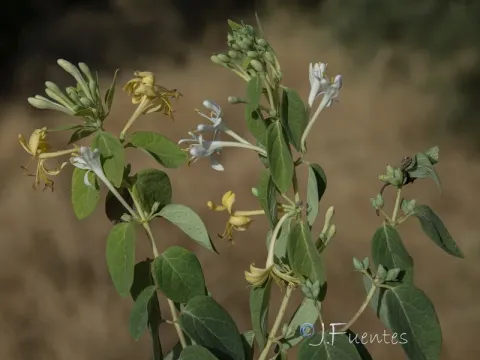
Two-flowered honeysuckle
Lonicera biflora
The two-flowered honeysuckle (Lonicera biflora) is a deciduous shrub belonging to the Caprifoliaceae family. It is recognized for its slender, climbing or trailing stems and its characteristic floral arrangement where flowers often appear in pairs.
What the section contains
Two-flowered honeysuckle
Native to the Mediterranean basin, this species is well-adapted to warm, temperate climates. It thrives in regions with mild winters and long growing seasons, making it a popular choice for gardens within these specific ecological zones.
The plant demands well-drained, fertile soil to reach its full potential. While it can adapt to various soil types, a loamy substrate with a neutral to slightly alkaline pH is optimal for healthy root development and vegetative growth.
Sunlight exposure is crucial for this species. It requires a position in full sun to partial shade, where it can receive enough energy for vigorous growth. Insufficient light often leads to leggy growth and reduced flowering density.
Routine maintenance includes balancing irrigation to keep the soil consistently moist but never waterlogged. Regular pruning is essential to maintain its shape and encourage bushiness, especially when grown as an ornamental climber.
Aphids are the most frequent pests, targeting the tender tips of new shoots during the spring. Early detection is key to controlling infestations before they cause significant leaf curling or stunted growth.
Powdery mildew often affects the foliage during high-humidity periods. Improving air circulation by thinning the branches can significantly reduce the pressure from this fungal infection.
Leaf spots caused by various fungi can occur if the plant is kept in poor ventilation conditions. Removing affected leaves and improving the growing environment usually resolves these minor issues.
Spider mites might become a concern during particularly hot and arid summer months. Keeping the plant hydrated and providing adequate space for air movement helps deter these tiny pests.
Root rot is rarely an issue unless the soil remains saturated for extended periods. Ensuring good drainage at the planting site is the most effective preventative measure against soil-borne pathogens.