
Utah honeysuckle
Lonicera utahensis
Description
Growing requirements
Utah honeysuckle (Lonicera utahensis) is a species of deciduous shrub belonging to the Caprifoliaceae family. It is native to the western regions of North America, where it typically inhabits cool, moist montane forests and subalpine areas.
The plant thrives in climates characterized by moderate to cool temperatures. In its natural range, it is commonly found in shady understories, which dictates its requirement for partial shade when cultivated in garden settings to prevent leaf scorching and excessive dehydration.
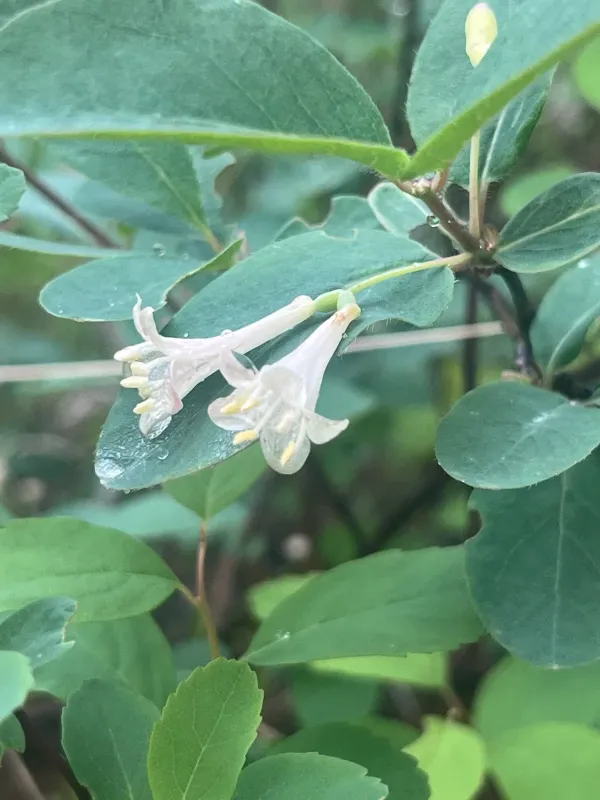
Botanically, it features a spreading habit, reaching up to 1.5 meters in height. Its leaves are opposite and ovate, and the plant produces attractive yellowish-white tubular flowers in pairs, followed by bright red berries that are generally considered ornamental rather than edible.
For optimal growth, the soil must be well-drained, rich in organic matter, and slightly acidic. It is essential to maintain consistent soil moisture, which can be achieved through regular watering and the application of organic mulch around the base of the shrub.
As a landscape plant, Utah honeysuckle serves well in woodland-style gardens or rock gardens. It requires minimal maintenance once established, provided that the location mimics its native habitat, specifically regarding protection from extreme heat and drought conditions.
Main diseases and pests
The primary health concerns include fungal issues such as powdery mildew, which can develop during periods of high humidity and poor air circulation. Proper spacing between plants is crucial to ensure that the foliage dries quickly after rainfall or irrigation.
Pests such as aphids and scale insects may occasionally infest the plant, targeting the tender new growth. Integrated pest management, including the use of horticultural soaps or neem oil, is recommended to manage populations without harming the beneficial insect fauna.