
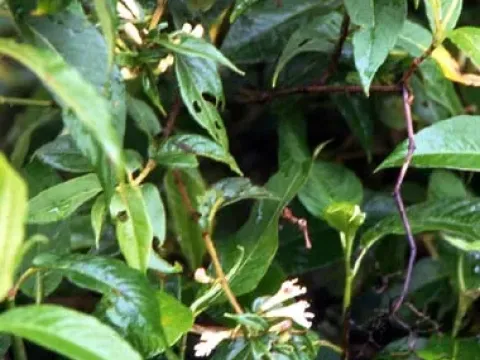
Two-colored honeysuckle
Lonicera discolor
Two-colored honeysuckle (Lonicera discolor) is a deciduous shrub belonging to the Caprifoliaceae family. It is native to the mountainous regions of Central Asia, where it thrives in rocky environments and along riverbanks, showcasing excellent adaptation to high-altitude climates.
What the section contains
Two-colored honeysuckle
This species is characterized by its remarkable resilience to harsh environmental conditions, including drought and extreme temperature fluctuations. Its biological structure allows it to survive in nutrient-poor soils, making it an excellent candidate for xeriscaping and environmental rehabilitation projects.
Successful cultivation requires well-drained soil conditions. The plant is sensitive to waterlogging, so it is essential to ensure that planting sites provide effective drainage to prevent root rot. It performs best in neutral to slightly alkaline soil types typical of its natural habitat.
Regarding agrotechnical practices, maintenance is relatively straightforward. Annual pruning during the dormant season is recommended to maintain shape and promote healthy growth. Young plants require supplemental irrigation until their root systems are fully established in the landscape.
In horticultural practice, Lonicera discolor is primarily valued for its ornamental appeal. It is commonly used in rock gardens, as a specimen shrub, or for erosion control on slopes. Its dense foliage and attractive flowers provide significant aesthetic value while contributing to soil stability.