
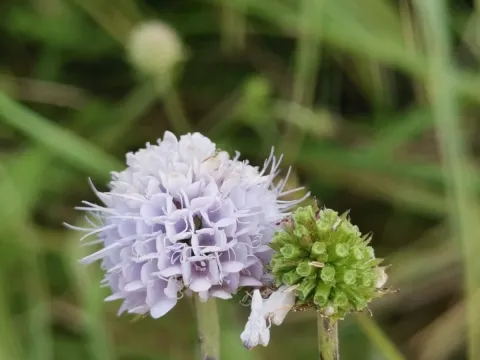
Succisella inflexa
Succisella inflexa
Sowing of Succisella inflexa is usually performed in the autumn or early spring. The seeds require stratification to ensure successful germination, so natural winter conditions are favorable for increasing field emergence.
What the section contains
Succisella inflexa
When sowing in the spring, seeds should be placed in prepared soil at a depth of no more than 1–2 centimeters. Optimal sowing density should provide enough space for the root system to develop during the first year of vegetation.
For establishing solid stands, a wide-row sowing method is recommended. This allows for easier maintenance of inter-row spaces and prevents overcrowding, which could otherwise lead to damping-off of the seedlings.
During the first weeks after germination, the crop develops slowly, making timely weed control essential. Manual or mechanical weeding during early stages is critical for the survival of young plants.
Resowing on the same site should not occur more frequently than once every 5-6 years. This practice helps avoid the accumulation of specific soil-borne pathogens and the depletion of essential soil nutrients.
Succisella inflexa is a member of the Caprifoliaceae family that prefers moist but well-drained locations. The plant is characterized by high winter hardiness and can tolerate temporary waterlogging of the soil.
For proper development, the crop requires fertile soils rich in humus. It grows successfully on loams and light clay soils, which provide a stable level of moisture throughout the growing season.
The plant is light-loving, although it can withstand light shading during peak sunlight hours. In open areas with sufficient solar illumination, the biomass of the plant develops at its maximum rate.
Regarding soil acidity, the crop exhibits moderate requirements, favoring neutral or slightly acidic environments. On overly acidic soils, growth inhibition is observed, and liming is recommended to improve yields.
A key success factor is the absence of standing water during the cold season. Despite its preference for moisture, waterlogging can lead to the rotting of the basal rosette, which negatively impacts the plant's winter survival.
The yield of green biomass for Succisella inflexa depends on the level of agronomic management and soil fertility. With proper growing conditions, the crop can provide a stable supply of raw material for several years.
Maximum biomass output is observed in the second or third year after sowing, once the bushes reach full development. During this time, the plant actively forms flower stalks suitable for harvesting and processing.
Succisella inflexa is valued as a promising honey plant. Its productivity as a nectar source depends directly on weather conditions during the flowering period, particularly the combination of air humidity and temperature in summer.
On an industrial scale, harvesting is conducted at the beginning of mass flowering. It is during this period that the concentration of biologically active substances in the aerial parts of the plant reaches its peak.
Proper drying of the harvested material allows for the preservation of its beneficial properties. Dry weight yield is typically about 20–25% of the total freshly cut grass weight, which should be considered during planning.
The main diseases of Succisella are related to fungal infections occurring under conditions of excessive humidity and poor ventilation. Powdery mildew can affect leaves in years with heavy precipitation and high air moisture.
Root rots pose a danger when grown on heavy, waterlogged soils. Prevention consists of practicing crop rotation and improving soil structure by incorporating organic matter and fertilizers.
Among pests, aphids are the most frequently encountered, damaging young shoots and flower stalks. They extract juices from the plant, leading to deformation of plant parts and an overall decrease in honey productivity.
Leaf beetles can also cause damage by consuming leaf tissue during the period of active growth. Pest control is carried out through agronomic practices, and in cases of severe infestation, via biological agents.
To prevent the spread of harmful organisms, it is necessary to regularly remove plant debris from the fields after the growing season, as these residues serve as overwintering sites for many insect species.
Harvesting is performed during the full flowering phase using a mechanical mower. It is important to choose a time for harvesting when there is no dew, as moist raw material spoils quickly during transport.
The cutting height should be at least 10-15 centimeters from the ground level. This is necessary to preserve the renewal buds and ensure rapid regrowth of the crop in subsequent years.
The harvested mass must be transported to the primary processing or drying site as quickly as possible. Delays can lead to self-heating of the material, which ruins its commercial appearance and chemical composition.
Drying is conducted in shaded, well-ventilated areas or in specialized dryers at temperatures not exceeding 45 degrees Celsius. Overheating leads to the loss of essential oils and discolors the material to brown.
After drying is complete, the raw material is cleaned of impurities and sorted. High-quality production should have a natural color, a specific aroma, and be free from traces of mold or pest damage.