
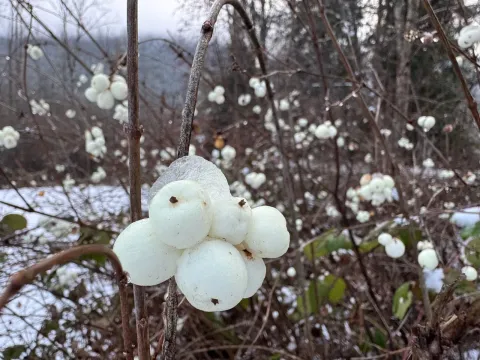
Snowberry
Symphoricarpos Duham.
Snowberry (scientific name: Symphoricarpos) is a genus of deciduous shrubs belonging to the Caprifoliaceae (honeysuckle) family. Native primarily to North America, these plants have adapted to a wide range of habitats, from mountain slopes to open woodlands.
What the section contains


Snowberry
The culture is highly valued for its soil adaptability. It thrives in various soil types, including clay, sand, and rocky terrain, provided the planting site offers reasonable drainage. It prefers neutral to alkaline soil conditions but is flexible enough to manage in slightly acidic environments.
Snowberry is recognized for its impressive hardiness. It withstands harsh winters and is drought-tolerant once established, making it a reliable choice for cold-climate gardening. Its ability to tolerate urban pollution and road salt makes it an excellent candidate for highway landscaping.
The botanical structure consists of delicate, bell-shaped flowers followed by unique, fleshy drupes (berries) that remain on the branches throughout the winter. These berries are toxic if ingested by humans but serve as an important winter food source for various bird species.
The primary use of the snowberry is ornamental, particularly for hedging and erosion control. Its extensive root system helps stabilize banks, while its dense growth habit allows for shaping into formal hedges or naturalized garden screens.
While generally robust, snowberries can be susceptible to powdery mildew, especially in humid or poorly ventilated conditions. Management involves choosing sunny locations with good airflow and removing heavily infected branches to prevent the spread of spores.
Gray mold (Botrytis) may affect the fruit clusters during excessively wet autumns. To minimize this risk, avoid overhead irrigation and ensure the shrubs are pruned correctly to allow light and air to penetrate the center of the plant.
Aphids can occasionally colonize young, tender shoots during the spring growth flush. Because the plant is resilient, minor infestations often require no intervention, but strong jets of water or insecticidal soaps can be used for significant control.
Root rot is rare but can occur if the shrub is planted in waterlogged or swampy conditions. Ensuring proper soil drainage during the initial planting phase is the most effective way to prevent soil-borne pathogens from compromising the plant's health.
Ongoing maintenance, such as yearly mulching and light pruning, strengthens the plant's resistance. A well-maintained snowberry shrub naturally limits the potential for disease outbreaks and maintains its aesthetic value throughout the seasons.