
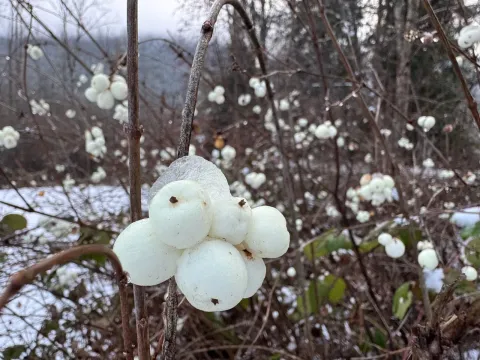
Snowberry
Symphoricarpos
Snowberry (Latin Symphoricarpos) is a deciduous flowering shrub belonging to the Caprifoliaceae family. Native to North America, this plant has been widely naturalized in various regions due to its versatility and high ornamental value, particularly for its persistent berry-like fruits.
What the section contains
 Chinese snowberry
Symphoricarpos sinensis
Chinese snowberry
Symphoricarpos sinensis
 Coralberry
Symphoricarpos orbiculatus
Coralberry
Symphoricarpos orbiculatus
 Creeping snowberry
Symphoricarpos mollis
Creeping snowberry
Symphoricarpos mollis
 Hybrid snowberry
Symphoricarpos hybrids
Hybrid snowberry
Symphoricarpos hybrids
 Littleleaf snowberry
Symphoricarpos microphyllus
Littleleaf snowberry
Symphoricarpos microphyllus
 Mountain snowberry
Symphoricarpos oreophilus
Mountain snowberry
Symphoricarpos oreophilus
 Roundleaf snowberry
Symphoricarpos rotundifolius
Roundleaf snowberry
Symphoricarpos rotundifolius
 Western snowberry
Symphoricarpos hesperius
Western snowberry
Symphoricarpos hesperius
 Western snowberry
Symphoricarpos occidentalis
Western snowberry
Symphoricarpos occidentalis
Snowberry
This shrub is highly adaptable to a wide range of climatic conditions. It thrives in both full sun and partial shade environments. Its significant cold hardiness makes it an excellent candidate for colder regions where other ornamental plants might struggle to survive winter conditions.
When it comes to soil requirements, the Snowberry is remarkably undemanding. It can grow successfully in poor, rocky, or chalky soils where other plants fail. However, it displays the most vigorous growth and dense branching when provided with well-drained, fertile soil that retains adequate moisture.
Cultural practices for Snowberry include routine pruning, which is best performed in late winter or early spring before new growth appears. This practice encourages better flowering and fruit production, and helps maintain a compact, tidy shape if used for garden hedging.
In terms of хозяйственное (economic) use, the plant is widely utilized for erosion control on slopes and embankments, thanks to its extensive root system. In landscaping, it is valued for its winter interest, as the showy, marble-like fruits persist long after the leaves have fallen.
Snowberry is generally considered a disease-resistant plant, but it is occasionally susceptible to powdery mildew, particularly in areas with high humidity and poor air circulation. Proper spacing between plants is critical to minimize this risk.
Gray mold can sometimes affect the berries if autumn conditions are excessively wet. Maintaining good garden sanitation by removing fallen debris and thinning the interior of the shrub can help prevent the proliferation of such fungal pathogens.
Aphids are the most common insect pests that feed on the tender young shoots. While their presence is usually not fatal to the plant, significant infestations can cause leaf curling and stunted growth, necessitating the use of horticultural soaps or pesticides.
Leaf-eating caterpillars may appear during the growing season. While they rarely cause widespread damage, observant gardeners should manually remove them or apply biological control agents if the aesthetic appearance of the foliage is compromised.
Overall, the maintenance of a healthy Snowberry shrub relies on avoiding waterlogged soil conditions and providing adequate light. Early detection of symptoms and prompt pruning of affected branches are usually sufficient to manage most minor pest and disease issues.