
Standish's honeysuckle
Lonicera standishii
Description
Growing requirements
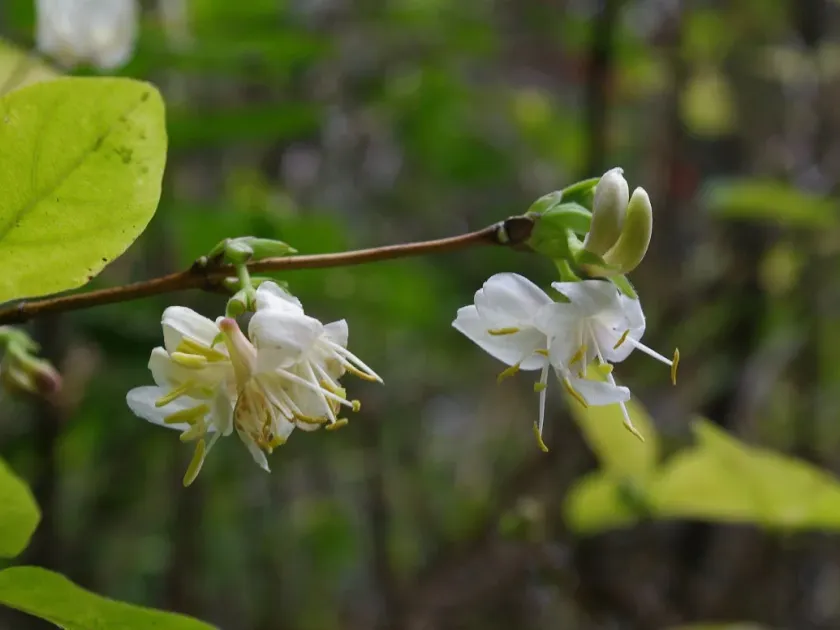
Standish's honeysuckle (Lonicera standishii) is a deciduous or semi-evergreen shrub belonging to the Caprifoliaceae family. Originating from China, this species is highly valued in horticulture for its fragrant, early-season flowers that emerge on bare stems in late winter or early spring.
This shrub generally grows to a height of 2 to 3 meters, possessing an arching, somewhat sprawling habit. Its botanical structure is characterized by ovate leaves and small, creamy-white flowers that emit a strong, pleasant fragrance, making it an excellent candidate for gardens near pathways or entryways.
The plant thrives in full sun to partial shade, though sunnier positions are preferred to encourage maximum floral display. Protection from cold, desiccating winds is essential, especially in colder temperate regions where the plant might suffer from branch dieback during severe frost.
Regarding soil preferences, it requires well-drained, fertile, and slightly alkaline to neutral soil. It does not tolerate waterlogged conditions, which can lead to root rot; therefore, site selection should prioritize areas with good natural drainage or the installation of an artificial drainage system.
Maintenance is relatively straightforward and involves annual pruning immediately after flowering to shape the plant and remove dead or crossing branches. Applying a layer of organic mulch around the base helps retain moisture and protect the root system from sudden temperature fluctuations.
Main diseases and pests
The primary diseases affecting Lonicera standishii include powdery mildew and leaf spot diseases, which are often triggered by stagnant air and high humidity levels during the growing season.
Insect pests such as aphids and spider mites can colonize the foliage during warm, dry weather. Regular monitoring and the application of insecticidal soaps or horticultural oils can help manage these infestations effectively.