
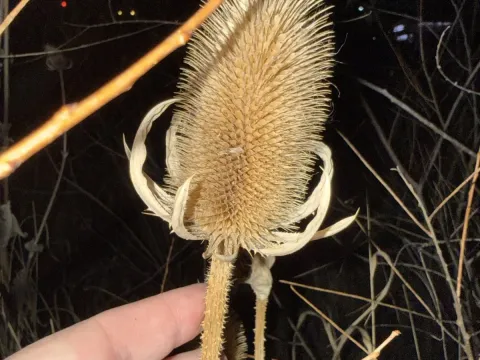
Cut-leaved teasel
Dipsacus laciniatus
Cut-leaved teasel (Dipsacus laciniatus) is a biennial herb belonging to the Caprifoliaceae family. In its first year, it develops a robust rosette of leaves, while in the second year, it produces a tall, prickly flowering stalk.
What the section contains
Cut-leaved teasel
Seeds should be sown in late autumn or early spring. Stratification is highly recommended to improve germination rates, as the seeds often exhibit a degree of dormancy that needs to be broken by cold temperatures.
The seeds are planted at a depth of 1–2 centimeters. Consistent moisture in the seedbed is essential during the initial germination phase to ensure a high density of seedlings across the field.
A row spacing of approximately 40–50 centimeters is optimal, allowing enough space for the plants to develop fully during their vegetative year without excessive competition for nutrients.
Early-stage weed management is crucial for this crop, as the young rosettes can easily be outcompeted by aggressive weeds, which would delay their development into mature plants.
This crop requires full sun exposure to thrive. Shade-grown plants tend to have weaker, thinner stems and smaller flower heads, which are undesirable for industrial processing requirements.
Cut-leaved teasel prefers fertile, loamy soils with a neutral or slightly alkaline pH. Good drainage is non-negotiable, as the roots are sensitive to waterlogging and may rot in poorly drained conditions.
While the plant is relatively drought-tolerant, supplemental irrigation during the peak growing season and the period of flower head development significantly increases the final yield quality.
The plant is hardy and well-adapted to temperate climates, capable of surviving harsh winters and fluctuating spring temperatures without significant protective measures.
Balanced fertilization, particularly during the first year, is necessary to support the biomass production of the leaf rosette, which directly correlates to the plant's vigor in its second year.
Fungal pathogens such as powdery mildew represent a primary threat to teasel crops, especially during seasons with high humidity and poor air circulation in the planting area.
Insect pests, including various aphids and weevils, can damage both the foliage and the developing flower heads, potentially lowering the market value of the harvested material.
Integrated pest management, including regular field monitoring and the use of resistant varieties where available, is the preferred approach for maintaining crop health.
Preventative measures involve maintaining clean field margins to reduce the presence of alternative hosts for pests and ensuring adequate plant spacing to minimize micro-climate humidity.
When chemical intervention is required, it must be performed with precision to avoid damaging the structural integrity of the flower heads which are the primary economic part of the plant.
Harvesting takes place in late summer or early autumn of the second year, once the flower heads have fully matured, hardened, and turned a characteristic woody texture.
The stems are cut manually or mechanically at a height of 10–15 centimeters above the ground. It is critical to perform harvesting during dry weather to prevent moisture-related quality loss.
Once harvested, the flower heads are dried in well-ventilated sheds to preserve their mechanical strength. Proper drying prevents the onset of mold and ensures the longevity of the product.
After drying, the product is graded based on the size and uniformity of the heads. Consistency is a key requirement for end-users in the textile and floristry industries.
Storage must be in dry, climate-controlled environments to keep the hooks and bristles of the flower heads intact and ready for their specific industrial applications.