
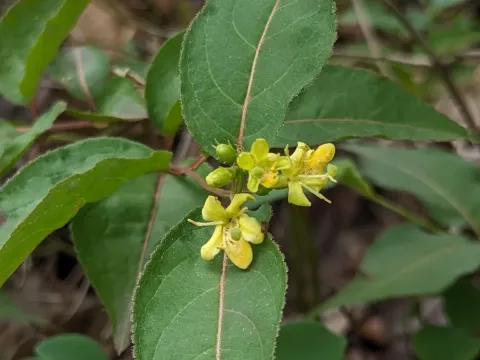
Diervilla
Diervilla Mill.
Diervilla (Diervilla Mill.) is a genus of deciduous shrubs belonging to the Caprifoliaceae family. Native to North America, these plants are highly regarded for their resilience and adaptability to various environmental conditions. They are known for their ability to spread via rhizomes, making them excellent for ground cover.
What the section contains


Diervilla
The plant thrives in both full sun and partial shade. While it exhibits tolerance for shady areas, sunny locations promote superior flowering and more vibrant foliage colors. Diervilla is recognized for its impressive cold hardiness, making it a reliable choice for temperate climate gardening.
Diervilla is highly adaptable regarding soil types. It performs well in well-drained soils, including rocky or sandy substrates. Its vigorous root system makes it an ideal candidate for soil stabilization and erosion control on slopes, where other plants might struggle to establish.
Agrotechnical maintenance focuses on providing adequate moisture during the first year after planting. Once established, the shrub becomes remarkably drought-tolerant. Annual spring pruning is recommended to remove dead wood and encourage the growth of fresh, lush foliage for the upcoming season.
The primary use of Diervilla is ornamental. It is widely used in landscape design for hedge formation, border plantings, and mass groupings. Due to its dense growth habit, it provides excellent coverage and aesthetic appeal in diverse garden settings, from formal parks to naturalistic landscapes.
Diervilla is notable for its natural resistance to many common plant diseases. This robust health profile allows it to thrive in urban environments where maintenance access may be limited. Proper site selection remains the best defense against potential issues.
Pest pressure on Diervilla is generally low. Aphids may occasionally colonize the soft tips of new shoots, but infestations are typically minor and easily controlled with standard horticultural soaps or biological predators if necessary.
Root rot is the most common issue encountered when plants are subjected to waterlogged soil conditions. To prevent this, ensure that planting sites have adequate drainage and avoid over-mulching directly against the base of the stems to maintain good airflow.
Monitoring for signs of stress is recommended throughout the growing season. Early detection of any anomalies allows for quick corrective action, such as adjusting the irrigation schedule or thinning out congested branches to improve air circulation.
Overall, Diervilla is a low-maintenance, hardy plant that provides long-term value in the garden. By following basic cultural practices, gardeners can enjoy a healthy, vibrant shrub that remains relatively free of significant pest and disease burdens.