
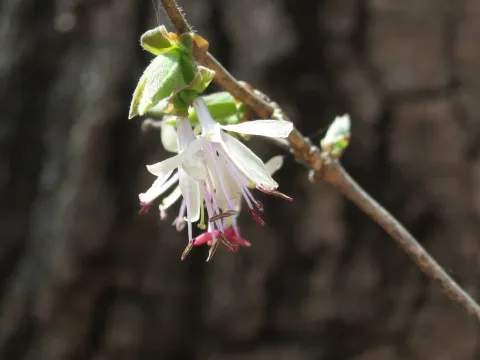
Early honeysuckle
Lonicera praeflorens
Early honeysuckle (Lonicera praeflorens) is a deciduous shrub species within the Caprifoliaceae family. It is distinct for its remarkably early phenological development, often showing leaf emergence just as the ground begins to thaw.
What the section contains
Early honeysuckle
Native to East Asia, including the Russian Far East, Korea, and Japan, this plant thrives in environments that offer moderate moisture. It performs best in well-draining, slightly acidic to neutral soil profiles enriched with organic matter.
Cultivation requires a site with full exposure to sunlight to ensure proper growth patterns and structural integrity of the branches. While it can tolerate partial shade, full sun maximizes the plant's ornamental appeal during the spring season.
Agricultural management includes consistent mulching around the root zone to stabilize moisture levels and suppress weed growth. Young plants require supplemental irrigation, while established shrubs show moderate drought tolerance.
This species is primarily valued for its role in ornamental horticulture. Its unique growth habit makes it an excellent candidate for structural landscaping, hedge formation, and early-spring garden accents.
Common pests associated with the genus include various species of aphids that congregate on young terminal shoots. Integrated pest management strategies should be employed if infestation levels exceed economic thresholds.
Powdery mildew represents the most significant pathological threat to the foliage. To minimize risk, gardeners should ensure adequate spacing between plants to promote airflow and reduce ambient humidity within the canopy.