
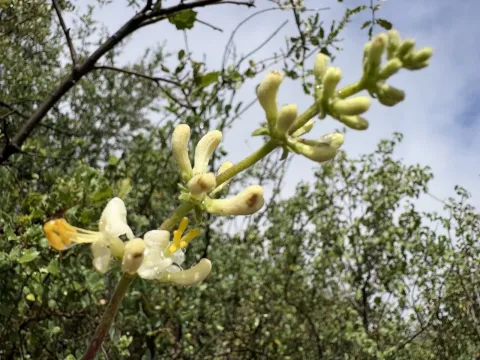
Chaparral honeysuckle
Lonicera subspicata
Chaparral honeysuckle (Lonicera subspicata) is a perennial shrub belonging to the Caprifoliaceae family, native to the coastal regions and mountains of California.
What the section contains
Chaparral honeysuckle
This species is highly adapted to Mediterranean climates, thriving in dry conditions and rocky or sandy soils that offer excellent drainage for its root system.
In terms of light requirements, L. subspicata prefers full sun exposure to maintain its compact growth habit and promote healthy flowering throughout the season.
The plant is biologically characterized by small, leathery leaves and distinctive spike-like inflorescences, which serve as its primary identifier in botanical surveys.
Due to its resilience, it is widely utilized for erosion control on slopes and as a key component in native plant restoration projects, supporting local pollinators.
The main threats to the health of this shrub include fungal infections such as powdery mildew, which thrive in environments with poor air circulation or high humidity.
Pests including aphids and mites can cause significant damage during the early growing season by attacking the succulent tips of young, emerging foliage.
Proper spacing during planting is essential to ensure adequate airflow, which is the most effective cultural method to prevent the development of pathogens.
Sanitation practices, such as removing dead or diseased wood during the dormant season, are vital to keep the plant vigorous and resistant to stress.
Integrated pest management should be employed, focusing on monitoring and using selective control agents only when economic or aesthetic thresholds are exceeded.