
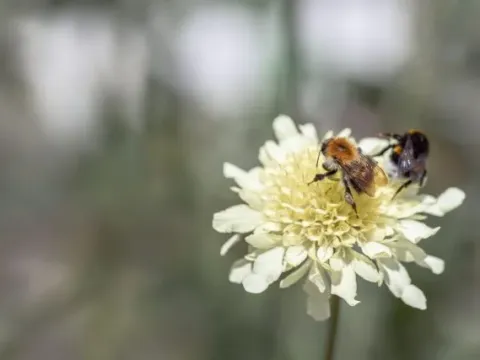
Cephalaria setosa
Cephalaria setosa
Cephalaria setosa is a perennial herbaceous plant that requires careful planning during the establishment phase. The optimal sowing time is early spring, once the soil has warmed up to at least +8...+10 degrees Celsius, ensuring adequate moisture for seed germination.
What the section contains
Cephalaria setosa
Before sowing, the soil must be prepared to a fine tilth to ensure uniform seed placement. A seed depth of 2 to 3 centimeters is recommended, as deeper planting may exhaust the seedling's energy reserves before it reaches the surface, while shallower planting risks rapid dehydration.
Seed density should be adjusted based on the specific end-use, such as fodder production or seed harvesting. A standard sowing rate ranges from 8 to 12 kilograms per hectare, which provides enough plant density to suppress early weed emergence.
Rolling the soil immediately after sowing is a critical agronomic practice. It creates the necessary contact between the seeds and the soil particles, facilitating efficient moisture movement from the deeper soil layers to the germinating seeds.
In regions with distinct winters, autumn sowing can also be successful. This allows the seeds to undergo natural stratification during the winter months, typically resulting in more uniform and vigorous seedling emergence in the following spring.
As a member of the Caprifoliaceae family, Cephalaria setosa is well-adapted to various environmental conditions. It is a light-loving crop, meaning it performs best in full sun and should be planted away from any structures or trees that cast heavy shadows.
Regarding soil preferences, this plant thrives in fertile loamy soils and chernozems with a neutral to slightly alkaline pH. While it shows some tolerance to saline conditions, high soil fertility is preferred to maximize the production of vegetative biomass.
The plant possesses a deep taproot system, which contributes to its remarkable drought tolerance. This feature allows Cephalaria setosa to survive and maintain growth during periods of low rainfall, making it a reliable choice for semi-arid agricultural regions.
Optimal growth temperatures range between +18 and +25 degrees Celsius. The species is also winter-hardy, capable of surviving freezing temperatures, which makes it suitable for cultivation across a broad range of temperate climate zones.
Proper weed management is essential during the establishment year. Because the plant grows relatively slowly in its initial phase, removing competing weeds ensures that the seedlings have enough nutrients and light to develop a robust root system.
Cephalaria setosa is relatively robust but can be prone to powdery mildew, especially during seasons with high humidity and poor air circulation. Providing adequate spacing between rows helps to maintain good airflow and reduce the risk of fungal outbreaks.
Various insect pests, including leaf-feeding beetles and aphids, may occasionally attack the crop. Monitoring for these pests is important, particularly during the early vegetative stages, to prevent significant leaf damage that could reduce photosynthetic capacity.
Root rot is the most common issue in poorly drained soils or in fields where water accumulates after heavy rain. Improving soil structure and ensuring proper drainage are the most effective preventative measures against these soil-borne diseases.
Viral infections are typically spread by aphids and can lead to plant stunting and reduced seed yields. Managing aphid populations through integrated pest management techniques helps to mitigate the risk of virus transmission throughout the field.
Adopting a regular crop rotation system is highly recommended. Rotating Cephalaria setosa with non-related crops every few years prevents the build-up of host-specific pathogens in the soil, ensuring long-term health and productivity of the field.