
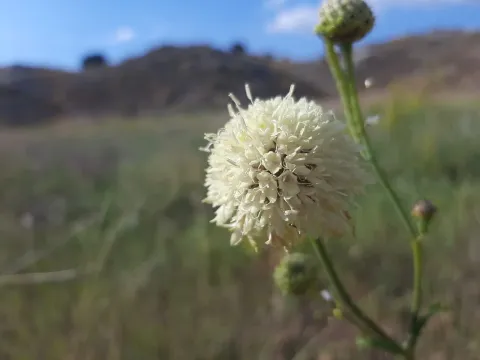
Cephalaria aristata
Cephalaria aristata
Cephalaria aristata is a perennial herbaceous plant belonging to the Caprifoliaceae family. It is recognized for its robust growth habit and is primarily distributed across mountainous terrains, where it adapts well to diverse geological conditions.
What the section contains
Cephalaria aristata
Botanically, the plant features erect, branched stems and a deep root system, which provide resilience against environmental stress. The structure of the plant is adapted to minimize water loss, reflecting its evolutionary origin in arid mountain habitats.
The crop thrives in well-drained soils and requires significant sunlight to achieve maximum biomass production. While it is adaptable to different soil types, consistent drainage is vital for its long-term survival and yield stability.
Climate requirements for this species are relatively broad; it demonstrates excellent tolerance to heat and seasonal moisture fluctuations. This makes it an ideal candidate for marginal lands that may not be suitable for more demanding agricultural crops.
The agricultural potential of this plant is largely attributed to its role as a forage source and its high value for local pollinator populations. It helps in soil erosion control due to its extensive root development and perennial cycle.
The crop is generally resistant to many common pathogens, though it remains vulnerable to root rot under conditions of waterlogging and poor soil aeration.
Pest management focuses primarily on controlling sucking insects, such as aphids, which may appear during the early stages of plant growth and during humid spells.
Preventive measures include optimizing plant density, which ensures proper ventilation between rows and reduces the incidence of fungal spores settling on the foliage.
Good agricultural practices, such as site selection and crop rotation, are essential to maintain the long-term health and productivity of Cephalaria aristata fields.
Monitoring for signs of pest pressure should be prioritized during the most active growth phases to ensure that early interventions can effectively mitigate potential losses.