
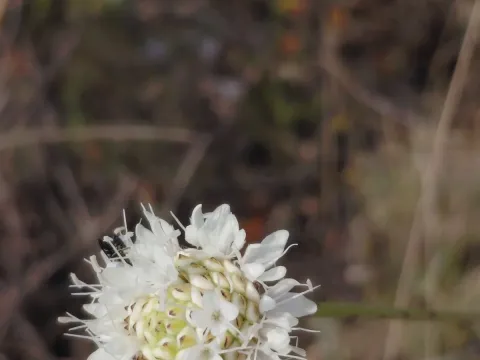
Cephalaria leucantha
Cephalaria leucantha
Cephalaria leucantha is a perennial herbaceous plant belonging to the Caprifoliaceae family. It is recognized for its robust habit and elongated stems, which can reach heights of over one meter, topped with distinct white or pale yellow flower heads.
What the section contains
Cephalaria leucantha
Native to the Mediterranean region, this plant has evolved to thrive in alkaline and calcareous soils. It is naturally adapted to rocky slopes and open, dry environments, which makes it highly resilient under challenging agricultural conditions.
The plant demonstrates a strong preference for full sun exposure. Inadequate light levels can result in leggy stems and poor flower production, therefore choosing an open, south-facing site is crucial for optimizing the development of the crop.
Regarding soil requirements, Cephalaria leucantha necessitates excellent drainage. While it is tolerant of various soil textures, it is essential to prevent waterlogging, especially during the dormant winter months, as it is susceptible to root rot in saturated conditions.
It exhibits notable drought tolerance once established, thanks to a deep taproot system. This biological trait allows it to withstand extended dry periods in the summer, making it a reliable candidate for sustainable agricultural practices in arid climates.
Sowing Cephalaria leucantha is typically executed in early spring after the risk of severe frost has passed. Seeds require a consistent temperature range between 12 and 18 degrees Celsius to achieve successful germination.
The seeds should be sown at a shallow depth of approximately 1 centimeter. Because the seeds are relatively small, they need a finely prepared seedbed to ensure they maintain contact with the soil moisture necessary for breaking dormancy.
Row spacing is an important factor in agricultural management. For easier mechanical weeding and air circulation, a spacing of 50 to 60 centimeters between rows is recommended, with a plant density of 6 to 8 individuals per square meter.
Germination is relatively slow and can take up to three weeks depending on soil conditions. During this establishment phase, it is vital to keep the soil consistently moist but not saturated, as seedlings are sensitive to surface crusting.
After thinning the seedlings to the desired spacing, the plants will focus their energy on developing a strong root system during the first year of growth. Full production and maturation of the floral display usually occur from the second year onward.
Powdery mildew is the most common fungal disease affecting Cephalaria leucantha. It manifests as a white, dusty layer on the foliage, often triggered by high humidity levels and poor ventilation within the crop stand.
To combat this, it is essential to maintain proper plant spacing, which ensures adequate airflow and reduces moisture retention on the leaves. Removing weeds early in the season also helps to decrease the humidity at the soil surface level.
Pests such as aphids can occasionally infest the growing tips of the plant. These insects suck the sap, which may lead to stunted growth and discolored leaves if left unmonitored during the peak growing season.
Management of these threats is best achieved through integrated pest management (IPM) strategies. Monitoring the crop regularly allows for early detection, which can prevent the need for chemical interventions and protect beneficial insects.
Crop rotation is a fundamental practice to prevent the build-up of soil-borne pathogens. By rotating the planting location every four to five years, growers can significantly lower the risk of systemic diseases affecting the roots and overall plant health.