
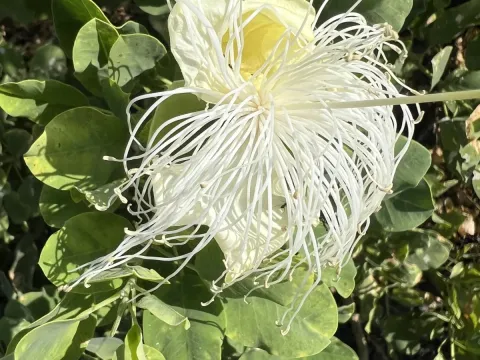
Mariana Caper
Capparis mariana
The Mariana Caper (Capparis mariana) is a perennial evergreen shrub belonging to the Capparaceae family. It is a highly specialized plant adapted to arid, rocky environments where few other crops can thrive.
What the section contains
Mariana Caper
The plant demands significant sunlight exposure to complete its physiological cycles. It is naturally resistant to high heat and drought, making it an excellent candidate for cultivation in Mediterranean-like climates.
Soil requirements for Capparis mariana focus on excellent drainage and a high alkaline content. The plant thrives in poor, stony soils where its deep taproot can seek out minerals and stabilize the surrounding terrain.
Agricultural management is relatively low-intensity due to the crop's resilience. However, proper spacing is required during the initial planting phase to ensure adequate air circulation and sunlight penetration for all parts of the shrub.
Irrigation must be carefully managed to prevent saturation, as the plant is highly prone to root rot if standing water persists. Drip irrigation systems are recommended to provide precise amounts of water during the growing season.
The harvest focuses on the unopened flower buds, which are the primary economic product. Harvesting is a manual task performed consistently throughout the growing season as new buds continue to emerge.
Timing is critical: buds must be collected while they are still firm and fully closed. Once a bud begins to open, its value significantly decreases, and it can no longer be used for standard commercial preservation.
Post-harvest processing involves curing the buds in a brine or vinegar solution. This traditional method removes bitter compounds and develops the signature pungent flavor profile associated with high-quality capers.
Grading is essential for market success. The smallest buds are generally the most expensive due to their texture, while larger buds are often used in processed food preparations.
Continuous harvesting promotes vegetative growth, forcing the shrub to produce more buds throughout the summer months, thus maximizing the seasonal yield per hectare.
Pest management for Capparis mariana usually addresses infestations of mites and scale insects. These pests often proliferate if the plant is subjected to poor soil conditions or weak overall health.
Diseases are typically related to moisture control. Various fungal pathogens can affect the roots if soil moisture is not managed correctly, requiring immediate drainage correction to save the specimen.