
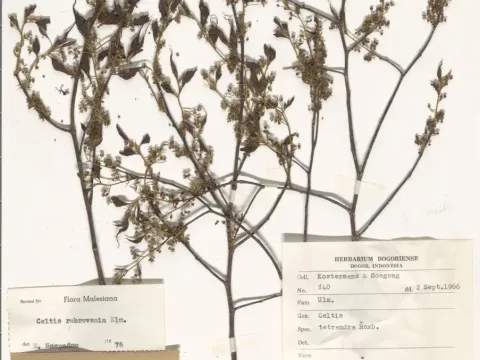
Celtis rubrovenia
Celtis rubrovenia
Propagation of Celtis rubrovenia is primarily achieved through seeds or vegetative cuttings. Seeds should be sown in the autumn to ensure they undergo natural stratification during the winter months.
What the section contains
Celtis rubrovenia
In nursery conditions, seeds are sown in prepared soil beds at a depth of 2–3 centimeters, maintaining consistent moisture levels for successful spring germination.
For vegetative propagation, semi-hardwood cuttings should be harvested in mid-summer. This method is preferred when specific genetic traits of the parent plant need to be preserved.
After germination or successful rooting of cuttings, young plants require nursery care for several years to develop a robust root system and a straight trunk.
Regular weeding and soil aeration in the root zone during the first few years are essential for the healthy establishment of the saplings.
Celtis rubrovenia belongs to the Cannabaceae family and is well-adapted to subtropical and temperate climates. It thrives in fertile, well-drained loamy soils with neutral to slightly alkaline pH levels.
The plant is highly photophilous and requires full sun exposure to develop a dense, aesthetically pleasing crown. Shade significantly hinders its growth rate and vitality.
While the tree shows moderate drought tolerance once established, young saplings require consistent watering, especially during the first two growing seasons.
It is known for its resilience in urban environments, tolerating air pollution and compacted soil better than many other deciduous tree species.
Structural pruning in late winter or early spring is recommended to maintain the tree's health and encourage a strong scaffold branch structure.
The primary use of Celtis rubrovenia is in landscape architecture, where it is utilized for park beautification, street lining, and as a specimen tree in gardens.
The timber of the hackberry genus is dense, hard, and durable, making it valuable for woodworking, tool handles, and furniture production.
The small, drupe-like fruits provide an essential food source for local wildlife, particularly bird species, throughout the colder seasons.
It serves as an excellent candidate for windbreaks and shelterbelts due to its sturdy wood and ability to withstand moderate wind pressures.
Seed harvesting occurs when the fruits are fully ripe in the autumn, ensuring the availability of high-quality propagation material for nurseries.
Celtis rubrovenia generally maintains strong natural defenses, but it can be susceptible to powdery mildew and leaf spot diseases under conditions of poor air circulation.
Pests such as aphids and spider mites can infest tender new growth, particularly during prolonged periods of hot and dry weather.
Integrated pest management, including regular tree inspections and the removal of fallen leaf litter, is the most effective way to prevent disease outbreaks.
If chemical intervention is necessary, the application of systemic insecticides or fungicides should be strictly followed according to the manufacturer's label.
Providing adequate spacing during planting ensures good airflow through the canopy, which is a critical cultural practice to reduce the likelihood of fungal infections.