
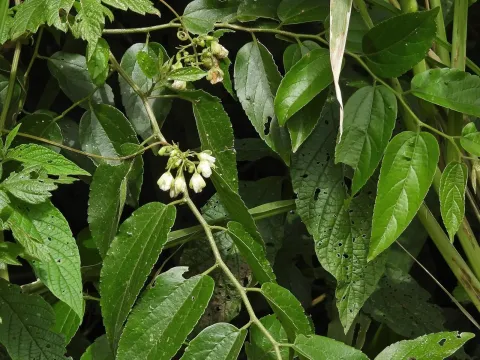
Celtis iguanaea
Celtis iguanaea
Celtis iguanaea is a perennial woody shrub or scandent vine belonging to the Cannabaceae family. It is recognized for its robust growth habit and ecological adaptability, often found thriving in diverse tropical and subtropical environments across the Americas.
What the section contains
Celtis iguanaea
The native range of this species extends from Mexico through Central America to South America. It typically inhabits forest edges and open areas, utilizing its climbing nature to secure access to sunlight, which is vital for its physiological development.
Regarding soil requirements, Celtis iguanaea prefers well-drained, nutrient-rich soils that allow for deep root penetration. While it is hardy, soil aeration is essential for optimal growth, and waterlogged conditions should be strictly avoided to prevent root damage.
The plant thrives in warm climates with temperatures consistently above 20 degrees Celsius. It exhibits significant resilience during seasonal fluctuations but performs best when provided with consistent moisture levels, especially during the early stages of establishment.
Economic applications for this crop are diverse, encompassing the use of its foliage as sustainable animal feed and the utilization of its bark and fruit in medicinal preparations, reflecting the plant's traditional and contemporary value.
Primary fungal threats to Celtis iguanaea include leaf spot diseases and powdery mildew, particularly in environments with high humidity and stagnant air. Proper spacing during planting is crucial to ensuring adequate ventilation and disease prevention.
Common insect pests include aphids and mites, which can cause significant physiological stress by feeding on the sap of young shoots. Integrated pest management strategies, emphasizing biological controls, are highly recommended for maintaining plant health.
Root rot represents a major threat when irrigation practices are poorly managed. Ensuring a proper irrigation schedule that matches the plant's growth stage is vital to avoid creating favorable conditions for soil-borne pathogens.
Weed management during the initial growth phase is necessary to prevent competition for light and nutrients. Keeping the base of the plant clear allows for faster establishment and superior overall crop productivity.
Regular diagnostic inspections are required to identify early signs of infestation. Utilizing organic-based treatments and maintaining high cultural standards often negate the need for harsh chemical interventions in a managed agricultural setting.